This article gives you ten methods that work in 2026, not recycled advice from a decade ago. You'll get specific tactics you can start using today, from LinkedIn outreach and referral asks to cold email sequences and inbound lead capture. Each method includes the exact steps to execute it, so you're not left guessing how to apply the theory.
We'll also cover how to track and automate the parts of prospecting that eat up your day, so you spend less time on data entry and more time talking to buyers. Whether you're a founder doing your own outbound or a sales manager building a repeatable process for your team, these methods scale from your first ten leads to your first thousand.
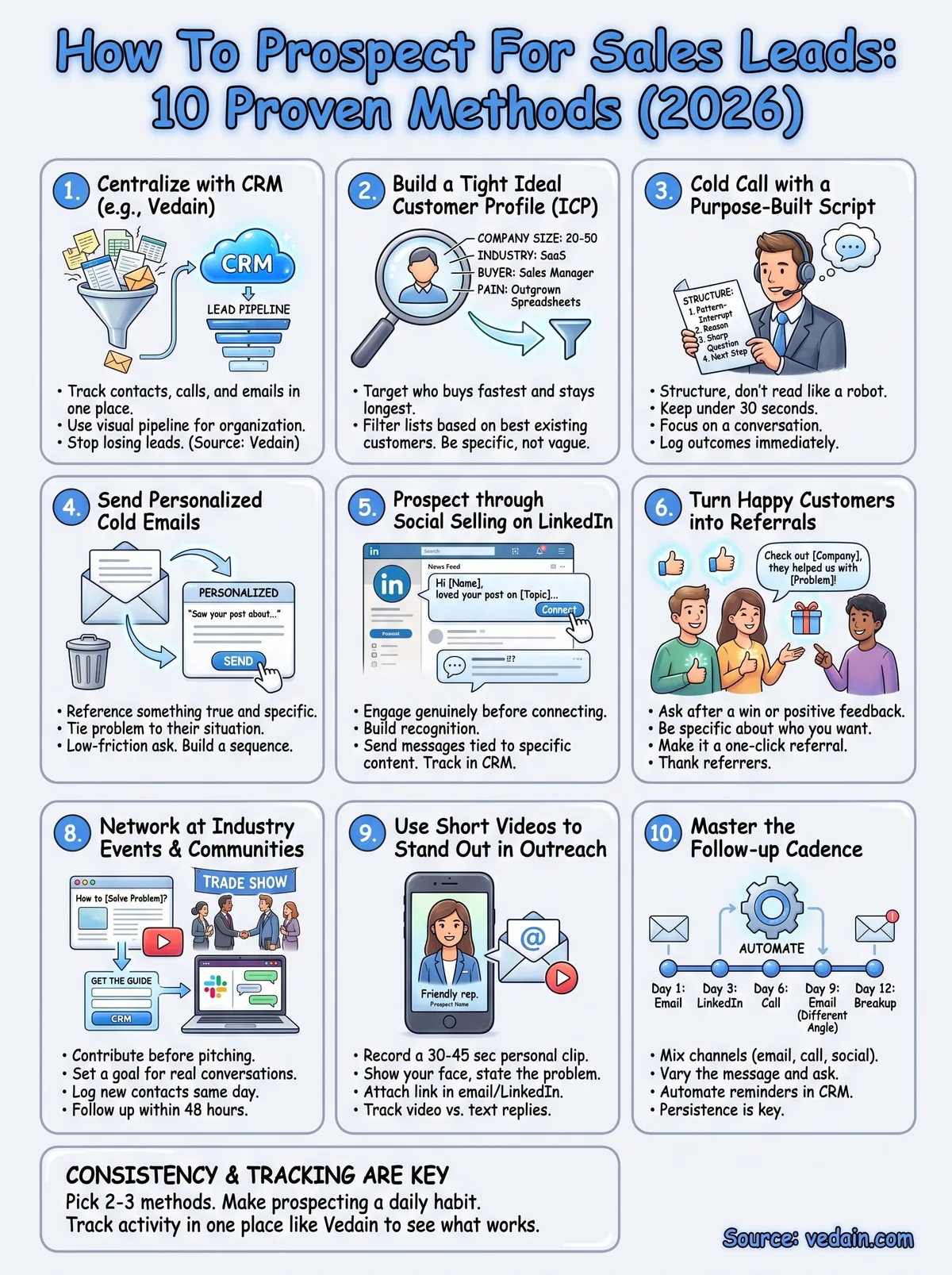
1. Centralize your outreach with a CRM like Vedain
Before you send a single cold email or make a single call, you need one place to track who you've contacted, what you said, and when to follow up. Without that, prospecting turns into a mess of sticky notes, spreadsheet tabs, and half-remembered conversations. A CRM for lead management like Vedain fixes this by giving every prospect a home, from first touch to closed deal, so nothing slips through the cracks.
How it works
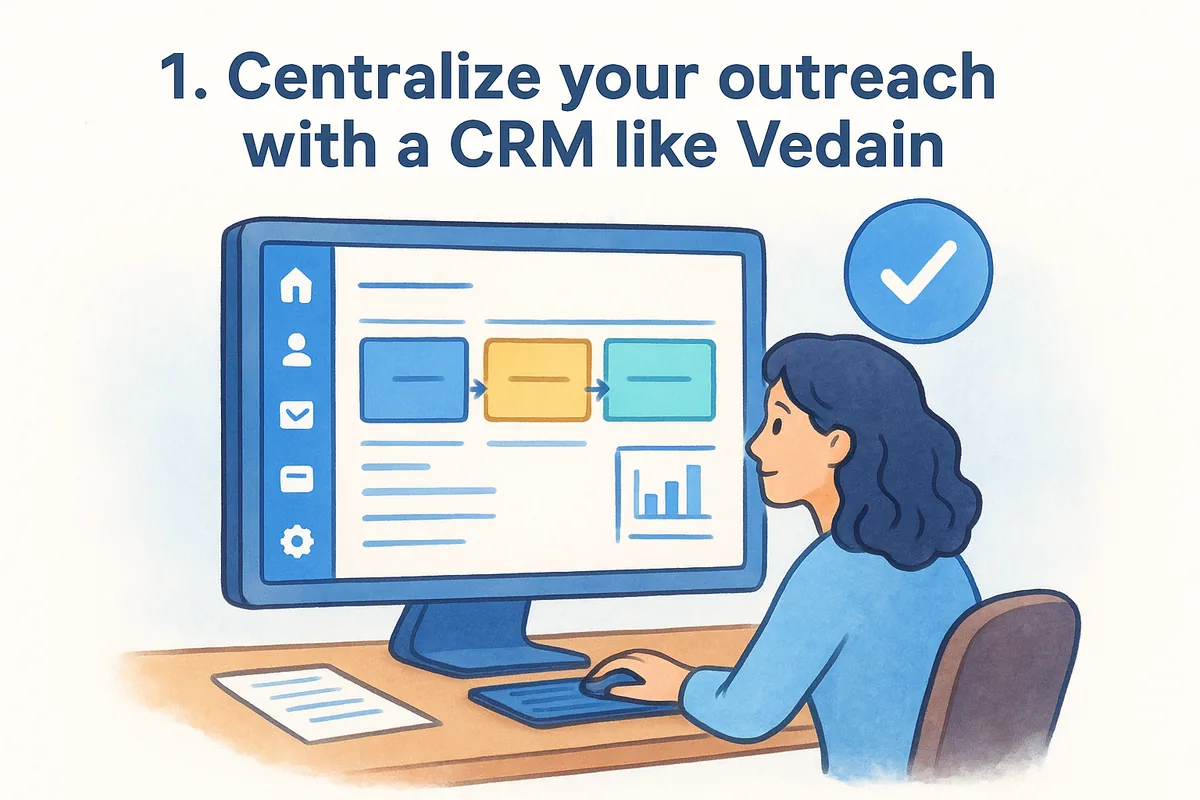
Vedain gives you a visual pipeline where every lead sits in a stage, from new contact to qualified to negotiating. You log calls, sync emails from Gmail or Outlook automatically, and set reminders for follow-ups without leaving the app. The Lead Forms feature captures inbound leads straight from your website into the same pipeline, so outbound and inbound prospects live in one system instead of two disconnected tools. Custom fields let you tag leads by industry, deal size, or source, so you can filter your list down to exactly who you should be calling this week.
A CRM doesn't create leads for you, but it stops you from losing the ones you've already found.
Who it's best for
This approach suits any sales team that's currently prospecting from memory or a spreadsheet, which is most small teams and solo founders. It's especially useful if you're juggling multiple channels, cold email, LinkedIn, referrals, because a CRM is the only place all that activity can converge. Teams switching from pricier platforms like HubSpot or Salesforce also benefit, since Vedain runs $10 per user per month with every feature included, no tier upgrades required to unlock automation or email sync.
Tips to get started
Set up your CRM before you start any other prospecting method on this list, not after. Here's a quick checklist:
- •Import your existing contacts and tag them by source (referral, cold list, inbound)
- •Set up two-way email sync so replies log automatically
- •Build a simple pipeline with four or five stages, don't overcomplicate it
- •Create a saved filter for "needs follow-up today" so you check it every morning
- •Turn on a workflow to auto-remind you after three days of silence
Start with the free trial, no credit card required, and get your pipeline running in under five minutes.
2. Build a tight ideal customer profile
Before you chase another lead, stop and ask who actually buys from you fastest and stays longest. Most reps waste weeks pitching companies that were never going to say yes. A tight ideal customer profile (ICP) tells you exactly who to target, so every hour of prospecting goes toward people who can actually become customers instead of names that just look good on a list.
How it works
Pull data from your best existing customers, the ones who closed fast, paid full price, and didn't churn. Look for shared traits: company size, industry, tech stack, job title of the buyer, and the problem that pushed them to buy. Write this down as a simple profile, not a vague persona. For example: "20-50 employee SaaS companies using Gmail, led by a sales manager who's outgrown spreadsheets." Use this profile to filter every list you build going forward, whether it's a cold call list, a LinkedIn search, or an inbound form response.
If you can't describe your best customer in two sentences, you're not ready to prospect at scale yet.
Who it's best for
This step matters most for teams selling into a specific niche rather than a broad market, since a narrow ICP sharpens every other tactic on this list. It's also critical for founders doing early outbound, where wasted conversations cost real time.
Tips to get started
- •Interview three recent closed-won customers and ask why they chose you
- •List the top five traits they share
- •Write your ICP in one sentence and share it with your whole team
- •Use custom fields in your CRM to tag leads that match, so you can filter fast
3. Cold call with a purpose-built script
Cold calling isn't dead, but calling without a plan is a waste of everyone's time. Reps who wing it stumble through the opener, lose the prospect in the first ten seconds, and hang up with nothing. A purpose-built script gives you a structure to react from, not a robot voice to read from, so you sound human while still hitting the points that actually move the conversation forward.
How it works
Build your script around four parts: a pattern-interrupt opener that skips the fake pleasantries, a quick reason for the call tied to something specific about their business, one sharp question that gets them talking, and a clear next step. Keep it under thirty seconds before you pause for a response. Practice it out loud until it sounds like you talking, not you reading. Log every call outcome in your CRM immediately, connected or not, so you know who to call back and when.
A good cold call script isn't a monologue, it's a map for a conversation you don't fully control yet.
Who it's best for
Cold calling works best for reps selling to SMBs and mid-market companies where a decision-maker actually picks up the phone. It's less effective against enterprise gatekeepers who screen every call, so weigh your ICP before you build a dialing list.
Tips to get started
- •Write three opener variations and test which gets the fewest hang-ups
- •Time-block one hour daily for calls, back-to-back beats scattered attempts
- •Record a few calls (with consent) and review your own tone
- •Log outcomes in your CRM the moment you hang up, not at end of day
4. Send personalized cold emails
Generic cold emails die in the inbox before anyone reads past the subject line. Reps who copy-paste the same template to five hundred contacts get the reply rate they deserve, close to zero. Personalized cold emails work because they prove you did the homework, which is exactly what makes a stranger willing to respond.
How it works
Start with one line that references something true about the prospect, a recent hire, a product launch, a post they wrote. Follow with a short statement of the problem you solve, tied to their situation, not a list of your features. End with a low-friction ask, a question they can answer in one sentence, not a request for a thirty-minute call. Keep the whole email under 120 words. Build this into a short sequence of three to five emails spaced a few days apart, since most replies come after the second or third touch, not the first.
The first line of a cold email either earns a read or gets a delete, there's no middle ground.
Who it's best for
This method suits reps who can research at scale, meaning you have enough time or tooling to personalize dozens of emails a day without it becoming generic again. It also works well alongside content marketing, since prospects who've seen your name before reply faster.
Tips to get started
- •Research one specific detail per prospect before writing
- •Cap your opener at two sentences
- •Build a five-email sequence with Vedain's automation and track opens in one dashboard
- •Test subject lines weekly, kill anything under a 30% open rate
5. Prospect through social selling on LinkedIn
LinkedIn has become one of the fastest ways to learn how to prospect for sales leads without cold-calling a stranger first. Buyers post about their challenges, their new roles, and their company wins right in your feed, which gives you a warm reason to reach out instead of guessing. Ignoring this channel means missing the easiest context you'll ever get on a prospect before the first message.
How it works
Start by engaging genuinely with posts from people in your ICP, a thoughtful comment beats a like every time. Once you've shown up a few times, send a connection request with a short note referencing their content or role, not a pitch. After they accept, wait a day or two, then send a message tied to something specific you saw, followed by a light question. Track every LinkedIn touch in your CRM alongside email and calls, so you're not managing two separate prospecting histories.
Social selling works because you're building recognition before you ever ask for anything.
Who it's best for
This method fits B2B sellers whose buyers are active on LinkedIn, especially in tech, professional services, and marketing. It's slower than cold email, so it suits reps who can play a longer game alongside faster channels.
Tips to get started
- •Comment on five prospect posts daily before sending any connection requests
- •Keep connection notes under two sentences
- •Wait 24-48 hours after acceptance before pitching anything
- •Log every LinkedIn interaction in your CRM to avoid duplicate outreach
6. Turn happy customers into referrals
Referrals close faster than almost any other lead source, yet most reps never ask for them. Customers who already trust you will gladly point you toward someone else with the same problem, but only if you make the ask specific and easy. Skipping this step means leaving your warmest leads sitting untapped inside accounts you've already won.
How it works
Time the ask right after a win, a renewal, or a genuine compliment, when goodwill is highest. Skip the vague "know anyone who needs us?" and instead name the exact type of company or role you're after, so the customer doesn't have to guess. Make it a one-click referral by offering to send a short intro email they can forward, rather than asking them to write one from scratch. Log every referral source in your CRM so you can see which customers send the best leads over time.
A specific referral ask gets a name, a vague one gets a maybe.
Who it's best for
This tactic works best for teams with a track record, meaning you've already closed enough deals to have satisfied customers worth asking. It's especially strong for service businesses and SaaS companies where customers know others in the same industry.
Tips to get started
- •Ask within a week of a customer's positive feedback or renewal
- •Offer a forwardable intro email template
- •Track referral sources as a custom field in your CRM
- •Thank referrers publicly or with a small reward to encourage repeats
7. Attract inbound leads with helpful content
Outbound gets you in the door, but content brings prospects to you already convinced you know what you're talking about. A prospect who reads three of your articles before you ever call shows up warmer than a cold list name ever will. Skipping content means you're stuck starting every relationship from zero trust.
How it works
Pick the two or three questions your best customers asked before they bought, then write direct, specific answers instead of vague thought leadership. Publish on your blog, LinkedIn, or wherever your ICP already spends time, and attach a simple lead capture form or a clear next step at the end. Vedain's Lead Forms feature pulls these signups straight into your pipeline, tagged by source, so you can see exactly which article turned into a real conversation. Repurpose each piece into a short video or LinkedIn post to stretch the reach without doubling the work.
Content doesn't replace outbound, it just makes outbound conversations start further along.
Who it's best for
This method suits teams with the patience to play a longer game, since content compounds over months, not days. It works especially well for founders and small teams who can't yet afford paid ads but have real expertise to share.
Tips to get started
- •Write one article per month answering a real question from a sales call
- •Add a lead form to every piece, tracked in your CRM by source
- •Repurpose each article into a LinkedIn post within a week
- •Review which topics actually convert every quarter, then double down
8. Network at industry events and communities
Conferences, trade shows, and niche online communities put you in a room full of people who already share a problem you solve. You skip the cold intro entirely because context does the work for you. Trade shows and Slack groups won't replace outbound, but they give you a steady trickle of leads who already trust the setting they met you in, which shortens the whole sales cycle.
How it works
Show up with a goal beyond handing out business cards. Pick two or three sessions or Slack channels where your ICP actually hangs out, then contribute before you pitch, answer a question, share a resource, or introduce two people to each other. When you meet someone worth following up with, get their info into your CRM the same day, while the context is still fresh, and tag them by event so you remember where the conversation started. A follow-up message within 48 hours, referencing the specific thing you talked about, beats a generic LinkedIn add sent a week later.
People remember who helped them at an event, not who pitched them.
Who it's best for
This works best for reps in tight-knit industries, like agencies, manufacturing, or SaaS niches with active online communities. Solo founders also benefit since one good conversation can replace weeks of cold outreach.
Tips to get started
- •Pick one recurring event or community and show up consistently, don't scatter across ten
- •Set a goal of five real conversations, not fifty business cards
- •Log new contacts in your CRM the same day, tagged by source
- •Send a specific follow-up within 48 hours, referencing your actual conversation
9. Use short videos to stand out in outreach
A text-only message blends into the fifty other messages sitting in a prospect's inbox. A thirty-second video stops the scroll because it shows your face and proves a real person sent it. Reps who add video to their outreach report higher reply rates precisely because it's still rare enough to feel personal instead of automated.
How it works
Record a short clip with your phone or a screen-recording tool, no studio setup required. Open with the prospect's name and one specific detail about their business, then state the problem you help solve in a single sentence, and close with a simple question. Keep it under 45 seconds, since longer clips lose attention fast. Attach the video link inside your cold email or LinkedIn message rather than embedding a large file, and log which prospects received a video versus a text-only touch in your CRM so you can compare reply rates over time.
A video doesn't need to be polished, it just needs to prove a human sent it.
Who it's best for
This tactic suits reps prospecting into busy, senior roles where a normal email gets skimmed in two seconds. It also works well for account-based selling, where you're targeting a short list of high-value accounts and can afford the extra minutes per message.
Tips to get started
- •Record five practice videos before sending your first real one
- •Keep every video under 45 seconds
- •Use the prospect's name and one detail in the first five seconds
- •Track video versus text reply rates as a custom field in your CRM
10. Master the follow-up cadence
Most deals aren't lost because the prospect said no, they're lost because nobody followed up enough times to get an answer. Research on B2B outreach consistently shows it takes multiple touches before a cold prospect responds, yet most reps quit after one or two attempts. A structured follow-up cadence turns silence into a real answer, yes or no, instead of leaving leads stuck in limbo forever.
How it works
Build a cadence that mixes channels instead of repeating the same email five times. Try email, then a LinkedIn touch, then a call, then a final breakup email, spaced two to three days apart. Each message should add something new, a different angle, a relevant resource, a shorter ask, not just "just checking in." Set this up once as a workflow in your CRM so reminders fire automatically instead of relying on memory or a sticky note.
The deal you almost gave up on is usually the one that closes on touch number six.
Who it's best for
This approach fits any rep working a real pipeline, since inconsistent follow-up is one of the most common reasons pipelines stall. It matters most for longer sales cycles where buyers need multiple nudges before they can commit.
Tips to get started
- •Map a six-touch cadence mixing email, LinkedIn, and calls
- •Automate reminders in Vedain's workflow builder so nothing slips
- •Vary the message each time, never repeat the same ask twice
- •Send one final breakup email before marking a lead cold
Making prospecting a daily habit
None of these ten methods work as a one-time push. Consistent prospecting beats a brilliant burst of effort followed by three weeks of silence, every time. Pick two or three tactics from this list that fit your ICP and your schedule, then run them every single day instead of trying all ten at once.
Track everything in one place so you can see what's actually working instead of guessing. A daily habit built around real numbers, calls made, emails sent, replies logged, beats vague motivation any week of the year. The reps who win aren't smarter, they just show up with a system instead of starting from zero every morning.
If you're still juggling spreadsheets and sticky notes to manage all this, stop. Start your free Vedain trial and get every lead, call, and follow-up organized in one pipeline before your next prospecting session.
Frequently Asked Questions
What is the best free tool for prospecting sales leads?
LinkedIn Sales Navigator and HubSpot's free CRM tier are the best free prospecting tools available today. LinkedIn Sales Navigator ($65/month for premium) allows you to search and filter prospects by industry and role, while HubSpot's free plan includes lead capture and basic email tracking. For budget-conscious teams, Zoho CRM also offers a free tier with lead management features, though it has fewer automation capabilities than Salesforce's entry-level plan ($165/month).
How much does it cost to use a CRM for lead prospecting?
CRM pricing for lead prospecting ranges from free to $300+ per user monthly, depending on features and scale. HubSpot's Starter plan begins at $45/month, while Salesforce starts at $165/month for sales cloud features. Pipedrive offers competitive pricing at $14-99/month per user, Freshsales starts at $15/month, and Zoho CRM provides a free tier plus plans starting at $14/month, making them ideal for startups prospecting on a tight budget.
What is the most effective lead prospecting method in 2024?
Account-based prospecting combined with intent data is the most effective method in 2024, with companies seeing 40-50% higher conversion rates. This approach uses tools like HubSpot, Salesforce, and Pipedrive to identify high-intent prospects based on website behavior and engagement signals. Pairing this with personalized outreach through LinkedIn and email—tracked within your CRM—significantly outperforms cold calling and generic email campaigns.
How many leads should a salesperson prospect per day?
Most high-performing salespeople prospect 20-50 leads per day depending on industry and sales cycle length. For complex B2B sales, 20-30 qualified prospects daily is realistic when using a CRM like Salesforce or HubSpot to manage quality interactions. CRMs like Pipedrive and Freshsales help track this activity, ensuring reps focus on quantity and quality rather than volume alone, with best-in-class teams achieving 15-20% conversion rates from prospects to opportunities.
Which CRM is best for tracking sales prospecting activities?
Salesforce and HubSpot lead the market for prospecting activity tracking with automated logging and detailed activity timelines. Salesforce ($165+/month) offers Einstein AI to predict lead quality, while HubSpot's platform ($45+/month) provides intuitive activity tracking and email integration. Pipedrive ($14-99/month) excels at visual pipeline management, Freshsales ($15+/month) offers AI-based lead scoring, and Zoho CRM provides excellent automation features at lower price points, making it ideal for teams prioritizing cost-effectiveness over enterprise features.
What percentage of leads should convert to sales opportunities?
A healthy prospecting-to-opportunity conversion rate is 10-20%, depending on industry and lead source quality. B2B SaaS companies typically see 15-25% conversions when using intent-based prospecting in platforms like HubSpot or Salesforce, while companies relying on cold outreach average 2-5%. Using CRM systems like Pipedrive, Freshsales, or Zoho to nurture and track leads systematically increases conversion rates by 30-50% compared to manual tracking.