1. Vedain CRM
Vedain CRM tops this list because it solves the exact problem Indian small businesses run into with every other platform: the quote you see is never the price you pay. Every module, from the visual deal pipeline to email warmup to no-code workflow automation, ships in a single flat $10 per user per month plan. There are no locked tiers, no "contact sales for enterprise features" walls, and no surprise charges once your team grows past five seats. For a founder comparing five different pricing pages at midnight, that simplicity alone makes Vedain CRM worth a serious look.
Key features
Beyond the pricing story, Vedain packs in all the CRM features that most budget CRMs treat as add-ons. You get a Kanban-style deal pipeline for tracking opportunities visually, two-way email sync with Gmail and Outlook, and a no-code workflow builder for automating follow-ups and task assignments. The AI Agent Marketplace adds over 30 pre-built agents for data enrichment and content generation, while AI Studio lets you build custom CRM features just by describing what you need in plain English.
- •Leads and contacts management with custom fields and smart filters
- •Visual deal pipeline with drag-and-drop Kanban boards
- •Two-way email sync for Gmail and Outlook
- •Multi-step email campaign automation
- •21-day email warmup for domain deliverability
- •Website lead capture forms
- •Custom dashboards and pipeline reports
- •LinkedIn automation for AI-generated post scheduling
Pricing in India
Here's where Vedain separates itself from nearly every name on this list: one plan, one price, everywhere. Indian teams pay the same $10 per user per month as teams in the US or UAE, with pricing also displayed in INR for local convenience. There's no free-forever tier that locks you out of automation, and no "starter" plan missing the features you actually need. You can start a trial without entering a credit card, which matters if you've been burned before by forgotten renewals.
A CRM that charges everyone the same fair price for every feature beats one that nickel-and-dimes you as your team grows.
Best for
Small and mid-sized sales teams looking for a CRM built for Indian businesses with a single, predictable software bill are the ideal fit here. If you're a 10-person startup in Bangalore or a 50-person distribution business in Mumbai, you get the same feature set as a much larger customer, without paying enterprise rates to unlock it. Teams migrating off HubSpot or Zoho because their bill kept climbing tend to find the switch especially satisfying, since Vedain replicates most of what they were using anyway, minus the tier games.
Pros and cons
No product is perfect for every team, so weigh these honestly before you commit.
Overall, if you're searching for a low-cost CRM that doesn't cut corners and that Indian teams can scale with rather than outgrow, Vedain's combination of low cost and complete feature access is hard to match on this list. It's built for teams that want to spend their software budget on growth, not on unlocking features they already assumed were included.
2. Zoho CRM
Zoho CRM is the name most Indian small businesses already know, since Zoho is a homegrown company with deep roots in the Indian SaaS market. It's a mature, feature-rich platform that scales from a five-person sales team to a several-hundred-seat enterprise, and that flexibility is exactly why it made this list. But that same flexibility comes with a tiered pricing structure that can get confusing fast if you're comparing it against simpler flat-rate tools.
Key features
Zoho CRM covers the fundamentals well and layers on genuinely advanced tools as you move up its plans. You get lead and contact management, a customizable Kanban pipeline, and workflow automation rules that trigger on record changes. Higher tiers unlock Zia AI predictions for lead scoring and an extensive marketplace of Zoho and third-party extensions.
- •Lead and deal management with customizable pipelines
- •Workflow automation and blueprint process builders
- •Zia AI for lead scoring and sales forecasting (higher tiers only)
- •Multichannel communication across email, phone, and social
- •Marketplace with hundreds of third-party integrations
- •Custom modules and fields for industry-specific setups
Pricing in India
Zoho prices its CRM in four tiers: Standard, Professional, Enterprise, and Ultimate, and Indian pricing runs roughly ₹800 to ₹2,600 per user per month when billed annually, based on Zoho's published pricing. Automation, AI features, and advanced reporting live behind the higher tiers, so the entry-level plan often feels thin once your team wants more than basic contact tracking, as this breakdown of Zoho CRM's small business plans shows.
The lowest advertised price rarely reflects what you'll actually pay once your team needs automation or AI features.
Best for
Growing Indian businesses that expect to scale into a large, multi-department operation suit Zoho CRM well, especially if you're already using other Zoho apps like Zoho Books or Zoho Desk, though it's worth seeing how one workspace compares to Zoho's 50-product maze. Companies wanting deep customization and don't mind a steeper learning curve will get more mileage here than teams that just want a simple pipeline tool.
Pros and cons
Weigh these carefully against your team's actual growth plans before signing an annual contract.
3. Bigin by Zoho CRM
Bigin is Zoho's answer to small businesses that found the full Zoho CRM too complex for their actual needs. It strips the platform down to a pipeline-first CRM built for micro and small teams, usually those with fewer than ten salespeople who just need to track deals without wading through dozens of settings menus. Think of it as Zoho's own admission that not every business needs enterprise-grade depth on day one.
Key features
Bigin keeps its feature set tight and focused on the sales basics that small teams actually use daily. You get multiple pipelines for different products or territories, built-in telephony for calling leads directly from the record, and simple workflow automation for follow-up reminders.
- •Multiple customizable pipelines for different sales processes
- •Built-in phone calling and WhatsApp integration
- •Email templates and two-way email sync
- •Basic workflow automation for task reminders
- •Mobile app for on-the-go deal updates
- •Import tools for migrating from spreadsheets
Pricing in India
Pricing stays refreshingly simple compared to full Zoho CRM, with Express and Premier tiers priced around ₹500 to ₹1,000 per user per month billed annually, according to Zoho's Bigin pricing page. That undercuts most CRMs on this list on paper, though WhatsApp integration and advanced automation sit behind the higher tier, which pushes the effective cost up once you need them.
A CRM built specifically for small teams beats a scaled-down version of one built for enterprises.
Best for
Bigin fits solo founders, freelancers, and small sales teams who want something simpler than full Zoho CRM but still want the Zoho ecosystem's reliability. Teams answering the search for best CRM for small business in India on a tight budget and with a short deal cycle will find Bigin's stripped-down approach easier to adopt than a heavier platform.
Pros and cons
Check these against how much your team plans to grow before locking in a plan.
Ultimately, Bigin works best as a starting point rather than a long-term home for a scaling sales team, since you'll likely outgrow it faster than a flat-rate, full-featured platform, which is why many teams end up weighing simpler Zoho alternatives built for India.
4. Freshsales
Freshsales, part of the Freshworks family, built its reputation on a clean interface and built-in phone and email tools that don't require a third-party dialer add-on. It's a solid pick for Indian teams that want AI-assisted lead scoring without jumping straight to Salesforce-level complexity. Freshworks itself has a strong India presence, with support teams familiar with local business hours and billing questions.
Key features
Freshsales bundles phone, email, and chat into one record view, so reps don't juggle five tabs to follow up on a lead. The Freddy AI engine scores leads and predicts deal outcomes based on historical patterns, much like other AI CRM platforms for small teams, while built-in calling lets you dial straight from the browser.
- •Freddy AI lead scoring and deal insights
- •Built-in phone dialer and email tracking
- •Visual deal pipeline with custom stages
- •Workflow automation for routine follow-ups
- •Territory management for larger sales teams
- •Native mobile app with offline access
Pricing in India
Freshsales runs on a four-tier structure: Free, Growth, Pro, and Enterprise, with Indian pricing landing roughly between ₹0 and ₹5,800 per user per month billed annually, based on Freshworks' published pricing. The free plan covers basic contact management for up to three users, but Freddy AI and advanced workflow automation stay locked behind the Pro and Enterprise tiers, which is where the real cost jumps in.
Free CRM plans rarely include the automation that actually saves your team time.
Best for
Freshsales suits small Indian teams that lean heavily on phone-based selling and want AI lead scoring without the enterprise price tag of Salesforce. Businesses already using other Freshworks products, like Freshdesk for support, will appreciate the shared login and consistent interface across tools.
Pros and cons
Compare these against how much you'll actually use the AI features before choosing a paid tier.
If you're set on comparing Freshsales feature-per-rupee value, it holds up fine at the free and Growth tiers, but it starts to lose its edge once your team needs the automation and AI tools that push you into Pro territory.
5. Pipedrive
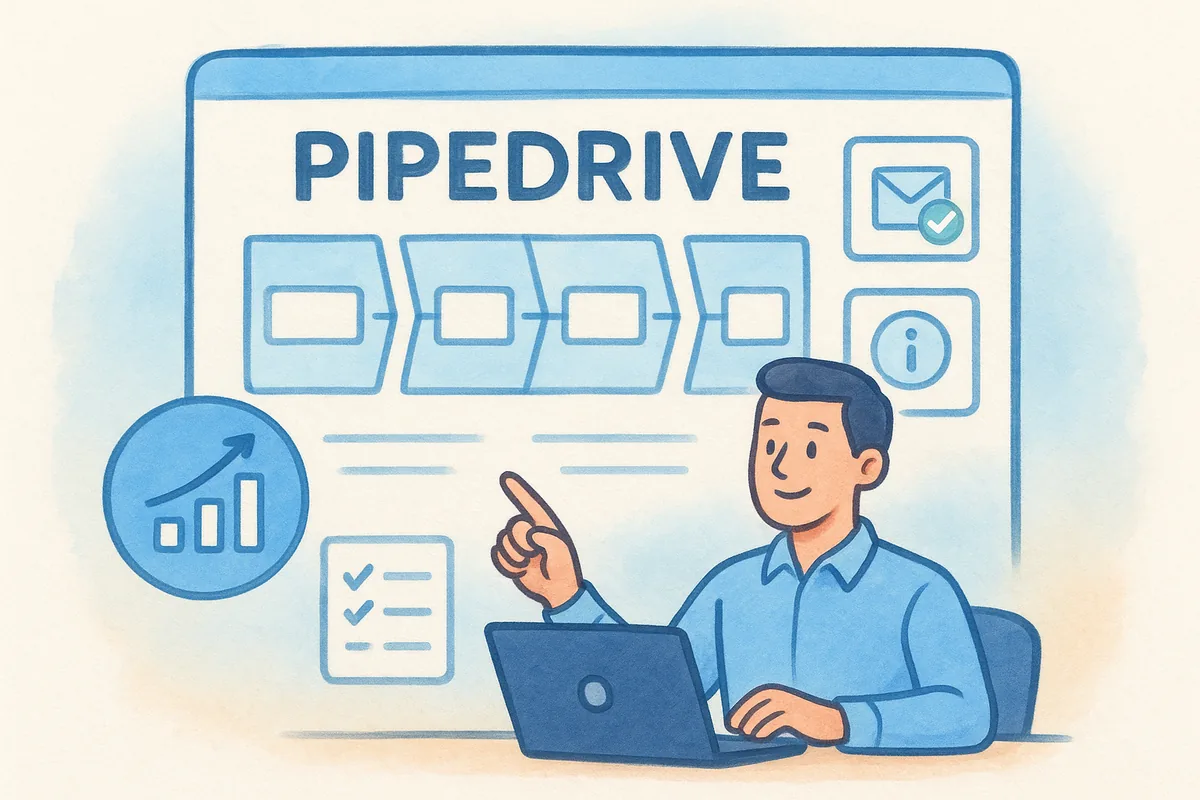
Pipedrive built its name on being a sales-first CRM designed by actual salespeople, not by a broader software company that bolted a CRM onto its existing suite. That focus shows up in how the product feels: the pipeline view is the homepage, not a buried tab, and every feature seems to answer the question "does this help close a deal faster." For Indian teams that want a visual, activity-driven tool without wading through marketing or support modules they'll never touch, Pipedrive earns its spot on this list.
Key features
Pipedrive centers everything around its visual pipeline, which lets reps drag deals between stages and see exactly where revenue is stuck. Activity-based selling reminders push reps to log calls and follow-ups rather than let leads go cold, and the built-in email sync keeps conversations attached to the right deal automatically, a pattern most cheaper Pipedrive-style tools copy.
- •Drag-and-drop visual sales pipeline with custom stages
- •Activity reminders tied to specific deals
- •Email sync with open and click tracking
- •Sales forecasting and revenue reports
- •Workflow automation for repetitive tasks
- •Mobile app with offline deal updates
Pricing in India
Pipedrive runs five tiers, Essential, Advanced, Professional, Power, and Enterprise, with Indian pricing landing roughly between ₹1,300 and ₹6,600 per user per month billed annually, based on Pipedrive's published pricing. Automation and advanced reporting sit in the middle tiers, so a small team chasing real functionality usually lands on Advanced or Professional rather than the entry plan, which pushes the effective monthly cost higher than the headline number suggests.
A CRM that markets itself on simplicity can still surprise you once automation and reporting move to a higher tier.
Best for
Pipedrive suits small Indian sales teams that run a fairly linear, deal-by-deal process and want a tool that keeps reps focused on activities rather than admin work. Teams coming from spreadsheets who want a gentle first step into CRM software, without Zoho's depth or HubSpot's marketing bloat, will find Pipedrive's interface easy to teach in an afternoon.
Pros and cons
Weigh these against how much reporting depth your team actually needs day to day.
Ultimately, Pipedrive works best as a pure sales pipeline tool rather than a full business platform, so budget for a mid-tier plan if automation matters to your team, or see how a pipeline CRM with LinkedIn and WhatsApp built in compares.
6. Kylas Sales CRM
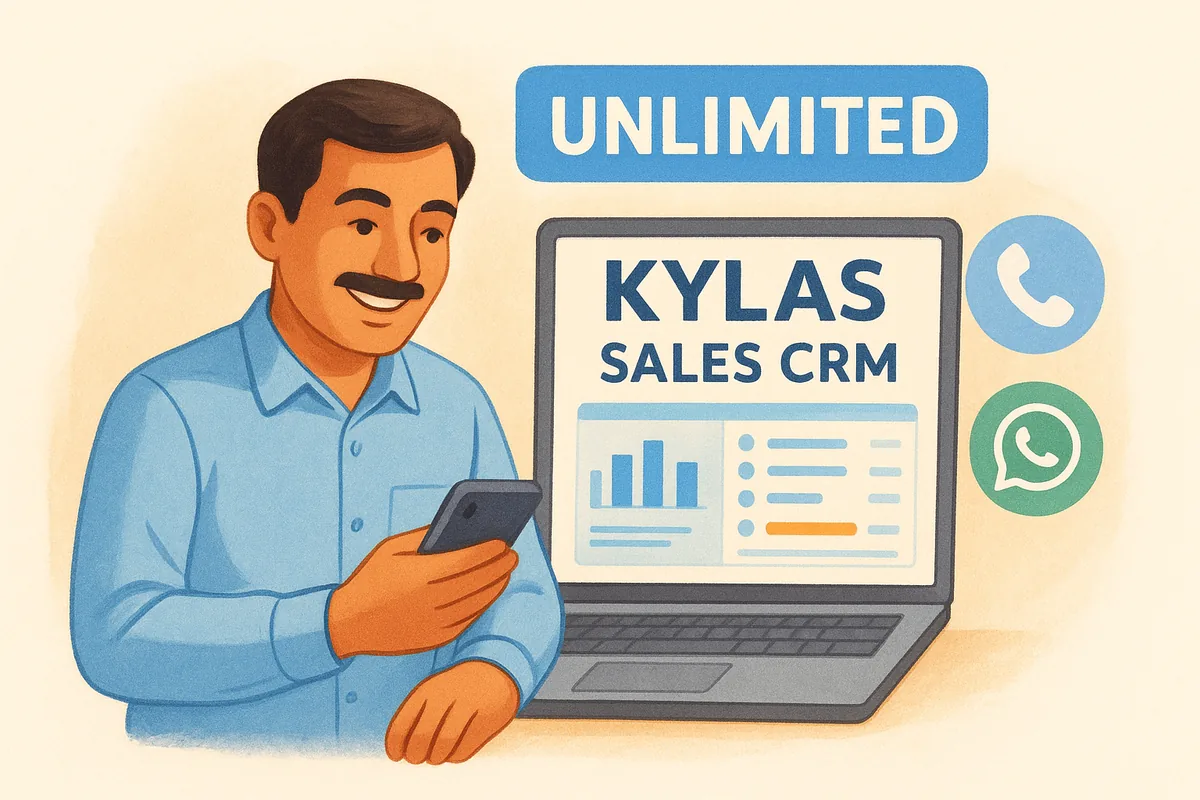
Kylas Sales CRM markets itself directly at the Indian small business owner, with pricing, support, and messaging built around this market rather than translated from a US-first product. It's a relatively young platform, but it has picked up traction with distributors, manufacturers, and service businesses that want an unlimited-user pricing model instead of paying per seat. That structure alone makes Kylas worth a look if you run a larger team on a tight per-person budget.
Key features
Kylas keeps its feature list practical rather than flashy, focusing on the daily blocking and tackling of lead management. You get contact and deal tracking, a CRM with WhatsApp integration for India built for how Indian sales teams actually communicate with prospects, and role-based access controls for managing what junior reps can see and edit.
- •Unlimited user pricing on a single company license
- •Native call and WhatsApp integration
- •Lead and deal pipeline with custom stages
- •Role-based permissions and territory management
- •Marketing automation add-on for email campaigns
- •Product catalog for teams selling multiple SKUs
Pricing in India
Kylas prices its plans per organization rather than per user on most tiers, with published pricing running roughly ₹10,000 to ₹35,000 per month depending on the plan and add-ons, based on Kylas's pricing page. That unlimited-user structure can work out cheaper than per-seat CRMs once your team crosses 15 or 20 people, but it can cost more than a flat per-user tool like Vedain if you're running a lean team of five or fewer.
Unlimited-user pricing only saves you money once your headcount actually justifies it.
Best for
Kylas fits mid-sized Indian sales teams, typically 15 to 100 reps, where paying per seat on other platforms would balloon the monthly bill fast. Distribution, manufacturing, and real estate businesses that lean heavily on phone and WhatsApp outreach tend to get the most value from its built-in communication tools.
Pros and cons
Run the math on your own headcount before assuming unlimited users automatically means cheaper.
For small teams still under ten people, Kylas rarely beats a flat per-user plan on price, but it becomes genuinely competitive once your sales floor starts to fill up.
7. LeadSquared
LeadSquared started as a marketing automation tool before growing into a full sales execution CRM, and that history still shows in how heavily it leans on lead capture and nurturing. Indian education companies, real estate developers, and BFSI firms with high lead volumes adopted it early, and it still markets itself squarely at businesses that live or die by lead response time. If your team spends more energy chasing incoming leads than managing a handful of enterprise accounts, LeadSquared earns a look.
Key features
LeadSquared's strength sits in capturing leads from dozens of sources and routing them to the right rep before they go cold, which is the core job of any lead management software in India. The platform bundles lead scoring with automated distribution rules, so a lead from a landing page or ad campaign lands with a specific rep within seconds rather than sitting in a shared inbox.
- •Lead capture from web forms, ads, and third-party integrations
- •Automated lead scoring and distribution rules
- •Sales and marketing automation in one platform
- •Built-in calling and SMS for high-volume outreach
- •Mobile CRM app built for field sales teams
- •Sector-specific templates for education, real estate, and BFSI
Pricing in India
LeadSquared prices its Sales CRM in Basic, Standard, Professional, and Enterprise tiers, with Indian pricing landing roughly between ₹1,250 and ₹5,000 per user per month billed annually, based on LeadSquared's published pricing. Marketing automation sits on a separate pricing track entirely, so a team wanting both lead capture and sales execution often ends up stacking two subscriptions rather than paying for one.
A CRM built for lead volume isn't automatically the cheapest option once you add the marketing tools that make it work.
Best for
LeadSquared fits businesses running high lead volumes through paid ads or partner referrals, especially education, real estate, and financial services companies with dedicated inside sales teams. Teams that need tight lead-to-rep assignment speed more than deep deal customization will get more out of this platform than a general-purpose pipeline tool.
Pros and cons
Weigh these against whether you actually need marketing automation bundled with your CRM.
For lean sales teams without heavy inbound lead volume, LeadSquared's specialization works against it, since you'll pay for lead management muscle you don't need.
8. HubSpot CRM
HubSpot built its reputation on a genuinely usable free CRM tier, and that free plan is still the reason so many Indian founders try it first. The catch shows up later, once your team wants marketing automation, custom reporting, or more than a handful of active workflows, since HubSpot's pricing jumps sharply once you cross from the free tools into its paid Sales or Marketing Hubs. It's a polished, well-documented platform, but it's built by a company selling a bundled marketing-sales-service suite, not a standalone sales CRM, and the key benefits and drawbacks of HubSpot show up clearly in how the pricing is structured.

Key features
HubSpot's core CRM covers contact management, deal pipelines, and email tracking at no cost, which is more generous than most competitors' free tiers. Paid Sales Hub tiers add sequences, quotes, and forecasting, while the broader HubSpot ecosystem lets you bolt on Marketing Hub or Service Hub without switching platforms.
- •Free contact and deal management with unlimited users
- •Email tracking, templates, and scheduling
- •Sales sequences for automated follow-up (paid tiers)
- •Deal pipeline with customizable stages
- •Reporting dashboards on Professional and above
- •Integration with Marketing Hub and Service Hub
Pricing in India
HubSpot's Sales Hub runs Free, Starter, Professional, and Enterprise tiers, with Indian pricing landing roughly between ₹0 and ₹10,000+ per user per month billed annually, based on HubSpot's published pricing. Reporting, automation, and custom objects live behind the Professional tier, so a small team wanting real functionality beyond contact storage usually skips Starter entirely and lands on a bill several times higher than the headline number suggests, as this look at Sales Hub plans and seat minimums explains.
The free CRM that gets you in the door isn't the CRM you'll actually be paying for a year later.
Best for
HubSpot suits Indian startups that already plan to invest in inbound marketing and want their CRM, landing pages, and email campaigns under one login from day one. Teams that outgrow the free tier fast, or that only need a sales pipeline without marketing bloat, will likely find the jump to Professional pricing harder to justify.
Pros and cons
Measure these against how much of the broader HubSpot ecosystem you'll actually use.
Small teams sticking strictly to the free plan get real value, but the hidden caps on HubSpot's free tier surface the moment automation or reporting becomes essential, and its pricing curve steepens faster than most alternatives on this list.
9. Salesforce Starter Suite
Salesforce built its name on enterprise CRM, and the Starter Suite is the company's attempt to shrink that power down to something a five-person Indian sales team could actually run without hiring a consultant. It bundles sales, service, and basic marketing tools into one entry-level package, which sounds appealing until you realize you're essentially getting a simplified preview of a platform designed for much larger operations. Founders who've heard the Salesforce name and assume bigger automatically means better should know this entry-level suite trades away most of the customization that makes Salesforce worth its enterprise price tag.
Key features
Guided setup walks new users through pipeline configuration and email connection, which helps teams with zero CRM experience get moving fast. Built-in email templates and automated follow-ups cover the basics of nurturing a lead, while a shared inbox keeps sales and support conversations in one place for small teams that don't have dedicated departments yet.
- •Guided onboarding for pipeline and email setup
- •Built-in email templates and automated follow-up reminders
- •Shared inbox for combined sales and support conversations
- •Basic reporting dashboards and forecasting
- •Mobile app for updating deals on the go
- •Path to upgrade into full Salesforce Sales Cloud later
Pricing in India
Salesforce prices Starter Suite at a flat rate per user per month, with Indian pricing converting to roughly ₹2,000 based on Salesforce's published pricing. That's a genuinely simple number compared to Salesforce's usual tiered complexity, but the moment you need advanced automation, custom objects, or deeper reporting, you're pushed toward Sales Cloud plans that cost several times more.
Salesforce's simplest plan is still priced like a stepping stone to something more expensive.
Best for
Early-stage Indian startups that expect to eventually need Salesforce's full enterprise depth minus the admin overhead, and want to start on familiar territory, get the most value from Starter Suite. Teams with no long-term enterprise ambitions will likely find the same money buys more usable features elsewhere on this list.
Pros and cons
Weigh the brand name against what you actually get at this price point.
For small businesses without enterprise ambitions, Starter Suite reads more like a funnel into Salesforce's pricier tiers than a genuinely competitive standalone CRM, so it's worth reviewing CRMs that cost less and do more for Indian SMBs.
10. EngageBay
EngageBay closes out this list as the all-in-one option for Indian small businesses that want marketing, sales, and support bundled under one roof without paying HubSpot-level prices for the privilege. It started as a scrappy alternative to bloated marketing suites, and that positioning still holds: you get a combined CRM and marketing platform rather than a sales-only tool, which suits founders juggling both jobs. If you're comparing options as the best CRM for small business India has to offer at the lower end of the price scale, EngageBay deserves a spot on your shortlist.
Key features
EngageBay bundles contact management, deal tracking, and email marketing into one login, so a two-person team doesn't need separate subscriptions for sales and outreach. Its all-in-one suite covers landing pages, live chat, and helpdesk ticketing alongside the core CRM, and the automation builder handles both sales follow-ups and marketing drip sequences from the same workflow canvas.
- •Contact and deal management with customizable pipelines
- •Email marketing and landing page builder included
- •Live chat and helpdesk ticketing bundled in
- •Marketing and sales automation on one workflow builder
- •Free tier for up to 15 users with basic features
- •Mobile app for tracking deals and contacts on the go
Pricing in India
EngageBay runs Free, Basic, Growth, and Pro tiers, with Indian pricing landing roughly between ₹0 and ₹4,000 per user per month billed annually, based on EngageBay's published pricing. Automation and advanced marketing tools sit behind the Growth and Pro tiers, so budget-conscious teams often start on Basic and find themselves upgrading sooner than expected once they want real email automation.
Bundling marketing and sales into one CRM only saves money if your team actually uses both halves.
Best for
EngageBay fits solo founders and small marketing-led teams that want CRM, email campaigns, and a helpdesk without stitching together three separate tools. Startups still figuring out whether they need heavy sales automation or heavy marketing automation get the flexibility to lean either way without switching platforms later.
Pros and cons
Weigh the bundled pricing against how much of the marketing side you'll genuinely use.
Teams that only need a sales pipeline will find lighter, sales-first tools like Vedain a better fit, but EngageBay earns its place for anyone who genuinely wants marketing bundled in.
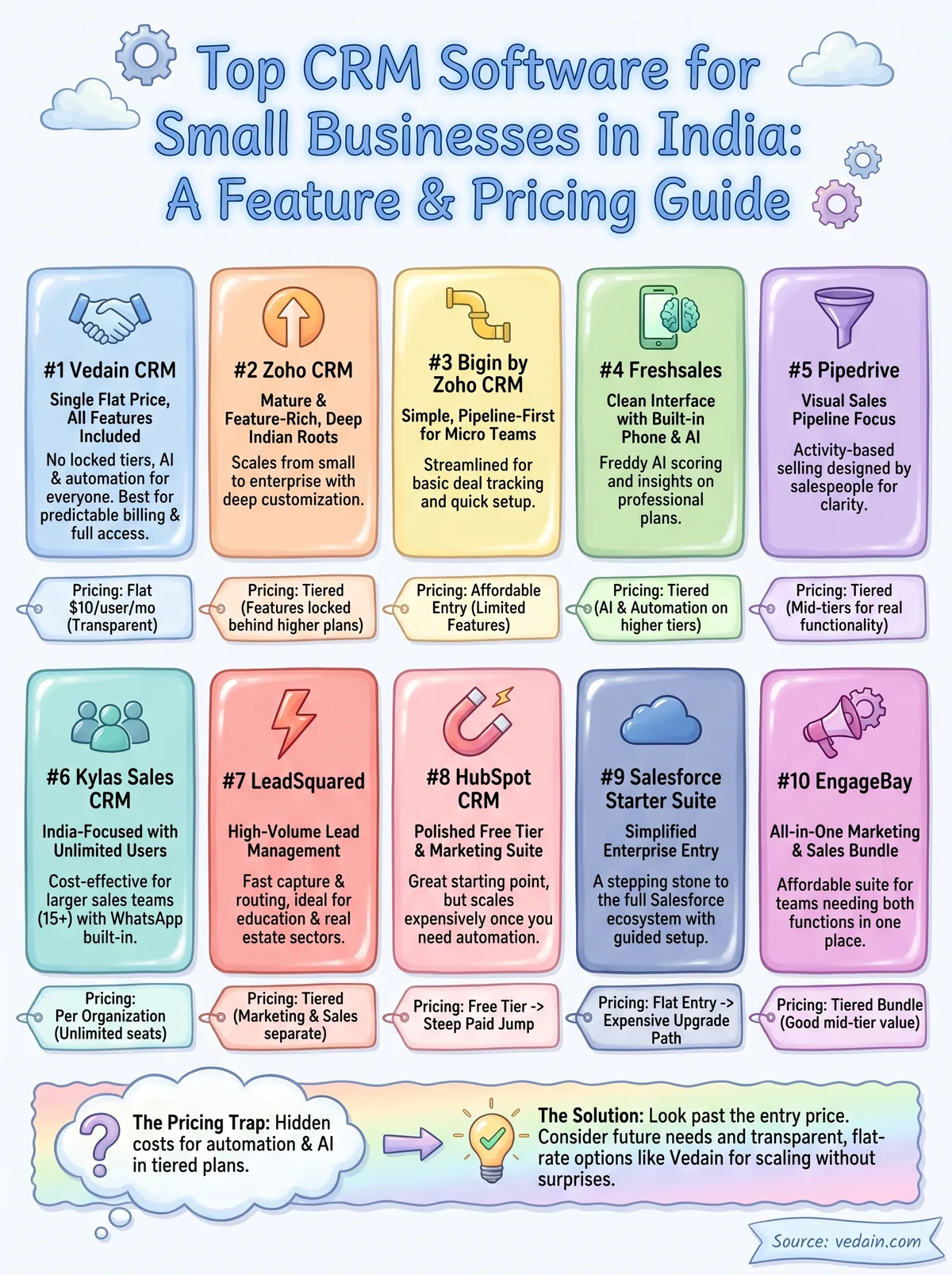
Picking the right CRM for your team
Every platform on this list solves a real problem for someone, but most Indian small businesses run into the same trap: they pick a tool based on the sticker price, then get hit with upsells once automation, AI, or email sync turns out to live behind a higher tier. That's the pattern worth watching for as you shortlist. Look past the entry-level number and ask what your team actually needs in six months, not just this week.
If you want a CRM that skips the tier games entirely, Vedain CRM gives you the full feature set at one flat rate, so your bill doesn't grow just because your team finally wants automation. It's a genuinely complete sales operating system without the pricing surprises that trip up so many growing teams in India. Setup takes under five minutes, and you don't need a credit card to try it. Start your 14-day free trial of Vedain CRM and see whether flat, honest pricing changes how your team actually uses a CRM.
Related reading
Frequently Asked Questions
Which CRM software is most popular in India for small business?
The most popular CRM software for small business in India in 2026 are Zoho CRM (largest installed base due to Indian heritage and pricing), Freshsales (fastest growing, modern UI), and HubSpot (popular among tech-forward startups). Salesforce is used by large enterprises. Pipedrive has growing adoption among India's B2B SaaS companies. For new small businesses choosing a first CRM in 2026, Vedain ($10/user) and Freshsales (₹999/user) are the most cost-effective starting points.
What CRM do Indian startups use?
Indian startups in 2026 most commonly use: HubSpot (free plan for early stage, upgrade on Series A) for inbound-led GTM; Freshsales (₹999/user, built by Indian unicorn Freshworks) for sales-led teams wanting a modern UI; Zoho CRM (₹800/user) for cost-conscious teams or those using Zoho's ecosystem; Pipedrive for SaaS startups with product-led sales motions. After Series B, many Indian startups adopt Salesforce as an enterprise signal. Vedain is increasingly popular among early-stage B2B Indian startups prioritizing cost and simplicity.
Is there an Indian-made CRM software?
Yes. Indian-made CRM software includes: Freshsales (Freshworks, Chennai — India's most successful SaaS company, NASDAQ listed), Zoho CRM (Zoho Corp, Chennai — not publicly listed, privately held), LeadSquared (Bengaluru — focused on education and BFSI verticals), Kapture CRM (Bengaluru — focused on field service and customer support), and Vedain (modern CRM built for small sales teams). Of these, Freshsales and Zoho CRM are the most mature and widely used globally.
What CRM features matter most for Indian small businesses?
CRM features that matter most for Indian small businesses: (1) WhatsApp integration — primary sales channel in India. (2) Mobile app — for field reps and owners who work on the go. (3) INR billing and GST-compliant invoicing. (4) Local customer support in IST hours. (5) Simple pipeline that reps actually log into daily. (6) Email tracking for email-based sales follow-up. (7) Lead source tracking (Google Ads, Just Dial, IndiaMart, referrals). Advanced features like AI forecasting and complex automation matter less for most Indian SMBs than these fundamentals.
How do I choose a CRM for my small business in India?
Choose a CRM for your Indian small business with these 5 questions: (1) What's my budget? (Under ₹1,000/user → Freshsales or Zoho. Under ₹2,000/user → add Pipedrive.) (2) Do I need WhatsApp integration? (→ Freshsales or Zoho.) (3) Do I use Zoho Books or Tally? (→ Zoho CRM for native integration.) (4) Do I need marketing automation? (→ HubSpot.) (5) Do I want the simplest setup? (→ Vedain or Pipedrive.) Start with a 14-21 day free trial on 2 platforms, import 50 real contacts, and see which one your team actually logs into.
What is the setup time for CRM for a small Indian business?
CRM setup time for a small Indian business: Vedain — 1-2 days (import contacts, configure pipeline, connect email). Freshsales — 1-3 days. Zoho CRM — 2-5 days (more configuration options). HubSpot — 2-5 days. Pipedrive — 1-2 days. The fastest setup: import your contacts CSV, create 4-6 pipeline stages that match your actual sales process, connect your Google Workspace or Outlook email, and have each rep do 5-10 practice deals. Don't spend weeks on perfect configuration — a simple CRM your team uses beats a complex one they avoid.