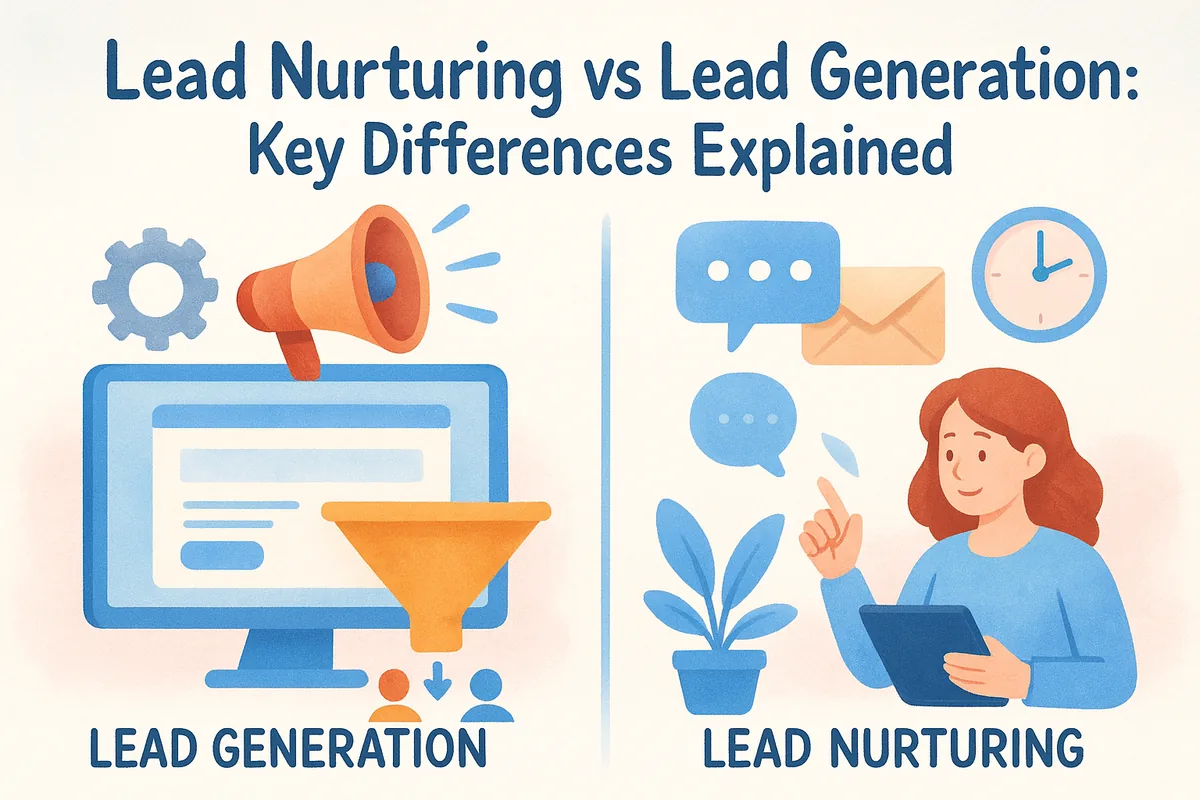
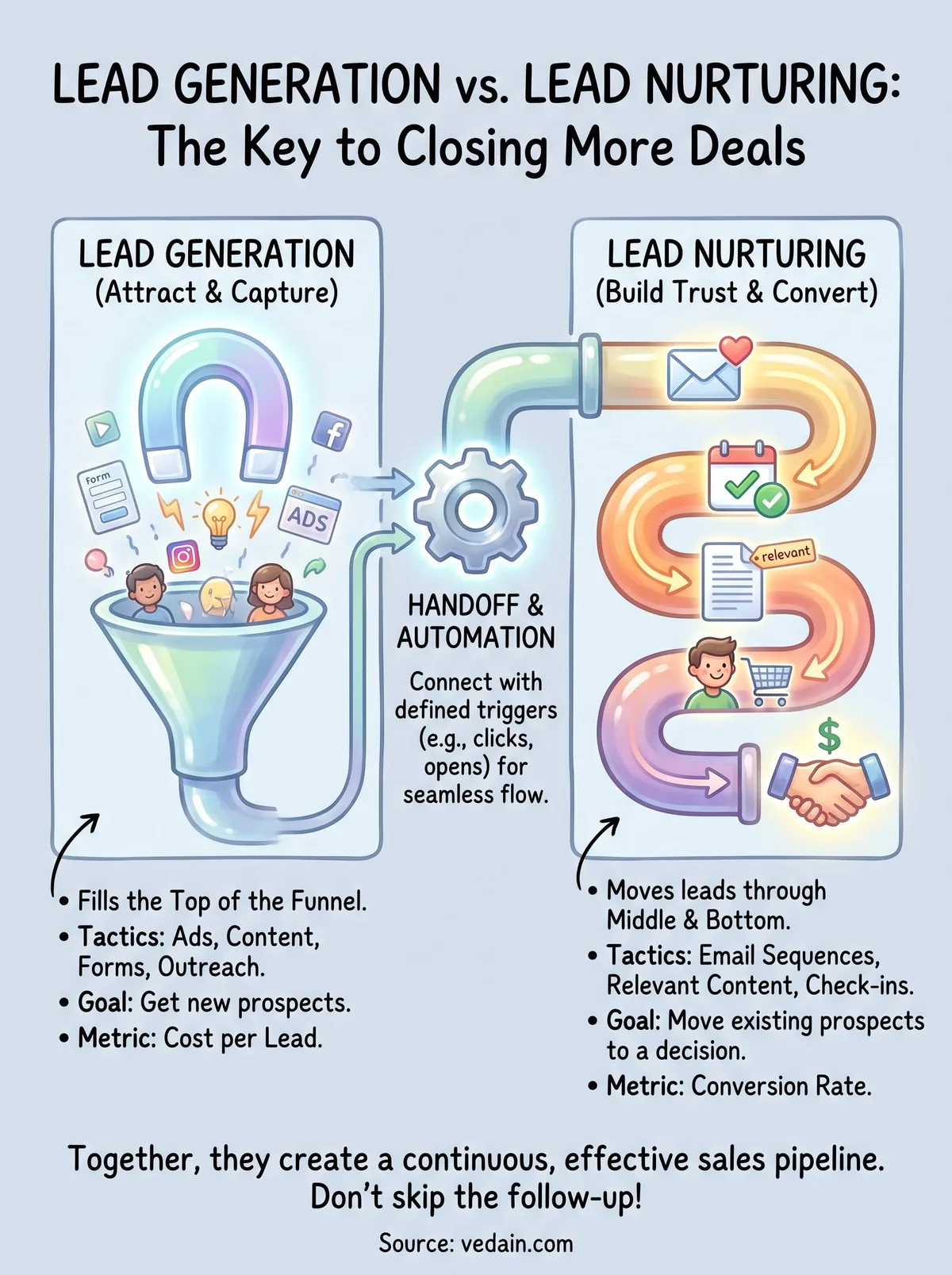
Here's the short answer: lead generation is how you attract and capture new prospects, through forms, ads, content, or outreach. Lead nurturing is what happens after, the follow-up emails, targeted content, and timely check-ins that move a cold contact toward a purchase decision. Generation fills the top of your funnel; nurturing carries prospects through the middle and bottom, where most deals actually get won or lost.
This article breaks down exactly where each process starts and ends, how they connect inside a real sales funnel, and what it looks like when a team runs both well. You'll see practical examples of each in action, plus how tools like automated sequences and pipeline tracking make handing leads between the two stages seamless instead of chaotic.
Why lead nurturing matters after generating leads
Most teams pour their budget into generation and treat nurturing as an afterthought, then wonder why conversion rates stay flat. That's backwards. Research from Forrester has long shown that companies excelling at lead nurturing generate significantly more sales-ready leads at a lower cost per lead than those that don't nurture at all. Generating a lead is only the opening move; the real revenue gets decided in what happens over the following days, weeks, or months.
The buyer isn't ready the moment they convert
Someone who downloads a pricing guide or fills out a demo form isn't necessarily ready to sign a contract. They're curious, comparing options, or solving a problem they haven't fully defined yet. B2B buying cycles routinely stretch across multiple touchpoints before a prospect commits, especially for anything priced above a quick impulse buy. If your sales team calls once, gets a soft no, and moves on, you've spent money generating a lead you never gave a real chance to convert.
A lead you don't nurture is a lead you paid for twice: once to generate it, and again when a competitor closes it instead.
What happens when nurturing gets skipped
Here's the pattern that plays out at companies that treat lead generation as the finish line instead of the starting point:
- •Marketing hits its lead volume target and gets praised for it, even though few of those leads ever talk to sales.
- •Sales reps burn through fresh leads fast, then let the ones that don't respond immediately go cold.
- •No one follows up with the 70 to 80 percent of leads who weren't ready to buy on day one.
- •Deals slip to competitors who simply stayed in touch longer.
- •Marketing gets blamed for "bad lead quality" when the real issue is zero follow-up cadence.
That last point matters because it's the most common misdiagnosis in sales and marketing teams. Lead quality usually isn't the problem. Lack of consistent follow-up is.
Nurturing turns cold contacts into warm conversations
A well-timed follow-up email, a relevant case study, or a short check-in call does something a single form submission never can: it builds familiarity. People buy from businesses they recognize and trust, and repeated, useful contact is how that trust gets built without feeling like a hard sell. This is where lead nurturing earns its keep, because it turns a name on a spreadsheet into someone who actually replies when your sales rep reaches out.
Think about your own inbox. You've probably ignored a cold sales email, then paid attention three weeks later when the same company sent something genuinely useful, a comparison guide, an industry stat, a relevant customer story. That's nurturing doing its job quietly in the background. It doesn't push for a close on every touch. It stays present until the timing lines up with the buyer's need.
The cost math favors nurturing every time
Acquiring a brand-new lead almost always costs more than following up with one you already have. Ad spend, content production, and outreach hours all go into that first capture. Once a lead exists in your system, nurturing them costs a fraction of that: an automated email sequence, a scheduled check-in, a targeted piece of content sent at the right moment. Skipping nurturing means you're throwing away leads you already paid to acquire, then spending again to replace them.
This is exactly why tools that connect generation and nurturing in one workflow matter so much. Inside Vedain's Workflows builder, you can set a lead to automatically enter a nurture sequence the moment it's captured through a lead form, no manual handoff required, no lead sitting untouched in a spreadsheet for two weeks while someone remembers to follow up. The generation and nurturing steps happen inside the same system instead of two disconnected tools that never talk to each other.
Skip nurturing and you're optimizing half of a process that only works as a whole. The next section covers how to build a nurturing strategy that actually keeps leads moving instead of stalling in your pipeline.
How to build a lead nurturing strategy that works
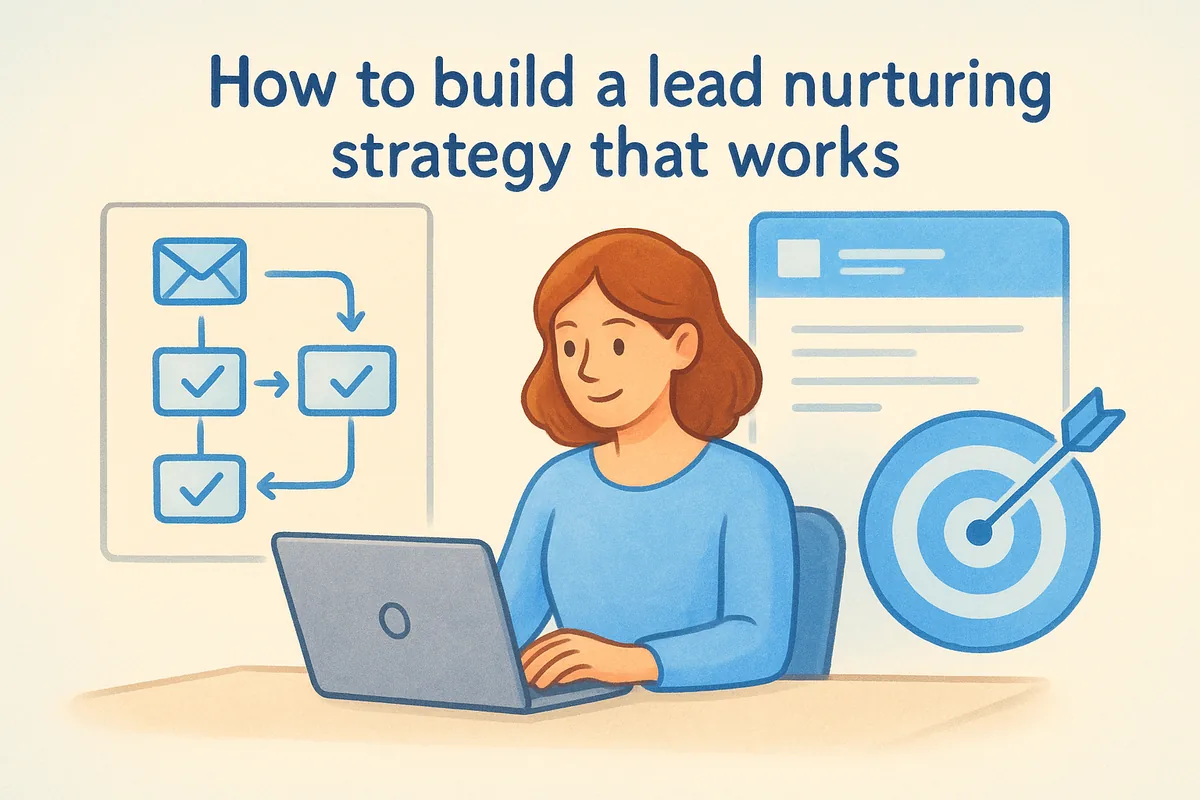
Building a lead nurturing workflow isn't about setting up one autoresponder and calling it done. It takes a defined structure that matches your content to where each lead actually sits in their decision process, and it takes discipline to keep that structure running without babysitting it manually.
Segment leads before you send anything
Start by grouping leads based on what they showed interest in and how they entered your pipeline. A visitor who downloaded a pricing comparison behaves differently than one who signed up for a webinar, and your follow-up sequence should reflect that. Vedain's smart filters let you segment contacts by source, activity, or custom fields, so a demo request and a newsletter signup never get the same generic email.
Match content to the buyer's stage
Once leads are segmented, map content to where they sit in the funnel. Someone early in research needs education, not a sales pitch. Someone who's already compared three vendors needs proof: case studies, ROI numbers, direct answers to objections.
A nurture sequence without stage-matched content is just spam with better formatting.
Automate the cadence, not the relationship
Sequences work best when they run on autopilot but still feel personal. Build a multi-step email sequence that triggers automatically when a lead hits a specific stage, then let a human step in once engagement signals show real intent. Vedain's email campaigns tool handles the automated side, sending timed follow-ups without a rep having to remember day 3 versus day 10.
Set a trigger for handing leads to sales
Nurturing only works if there's a clear point where marketing stops nudging and sales starts talking. Define that trigger in advance, whether it's opening five emails, clicking a pricing link twice, or booking a call directly. Without that handoff rule, leads either sit in nurture forever or get pushed to sales too early and go cold from a mistimed pitch.
- •Set clicks, opens, or page visits as engagement thresholds
- •Route qualified leads straight into your deal pipeline
- •Alert the assigned rep automatically instead of relying on someone checking a report
A strategy built this way runs mostly on its own, catches leads at the right moment, and only pulls a person in when the lead is actually worth their time.
Lead generation vs lead nurturing: key differences
Once you see how tightly the two processes connect, it helps to line up lead generation vs lead nurturing side by side and see exactly where one job ends and the other begins. They share a funnel, but they answer different questions, run on different timelines, and get measured with different numbers entirely.
Different goals, different metrics
Generation answers "how do we get more prospects," while nurturing answers "how do we get the prospects we already have to buy." Confusing those goals is why teams often judge nurturing campaigns by lead volume, a metric that belongs to generation, not conversion.
Generation asks "who's interested?" Nurturing asks "are they interested enough yet?"
Different owners, different tools
Because the goals split, so does who runs each process day to day. Marketing typically owns generation, building the landing pages, ads, and forms that pull new contacts into the system. Sales, or a hybrid marketing-sales function, usually owns nurturing once a lead exists, since it takes judgment calls about timing and messaging that pure automation can't fully replace. Vedain's reports and analytics make this split visible instead of theoretical: you can track exactly where a lead entered the pipeline and how many nurture touches it took before it converted, which keeps both teams accountable for their half of the process.
Different timelines
Generation happens in a moment: a form gets submitted, a call gets booked, a download completes. Nurturing has no fixed endpoint. It runs until a lead either converts, disqualifies itself, or goes cold from inactivity. That open-ended nature is exactly why nurturing needs automated sequences behind it. A rep can remember to follow up once. Remembering the right message on day 3, day 10, and day 30 for two hundred leads simultaneously isn't realistic without a system doing the tracking. Treating both processes as one continuous motion, rather than two separate departments competing for credit, is what actually moves prospects from "interested" to "customer."
Lead nurturing examples and tactics for sales teams
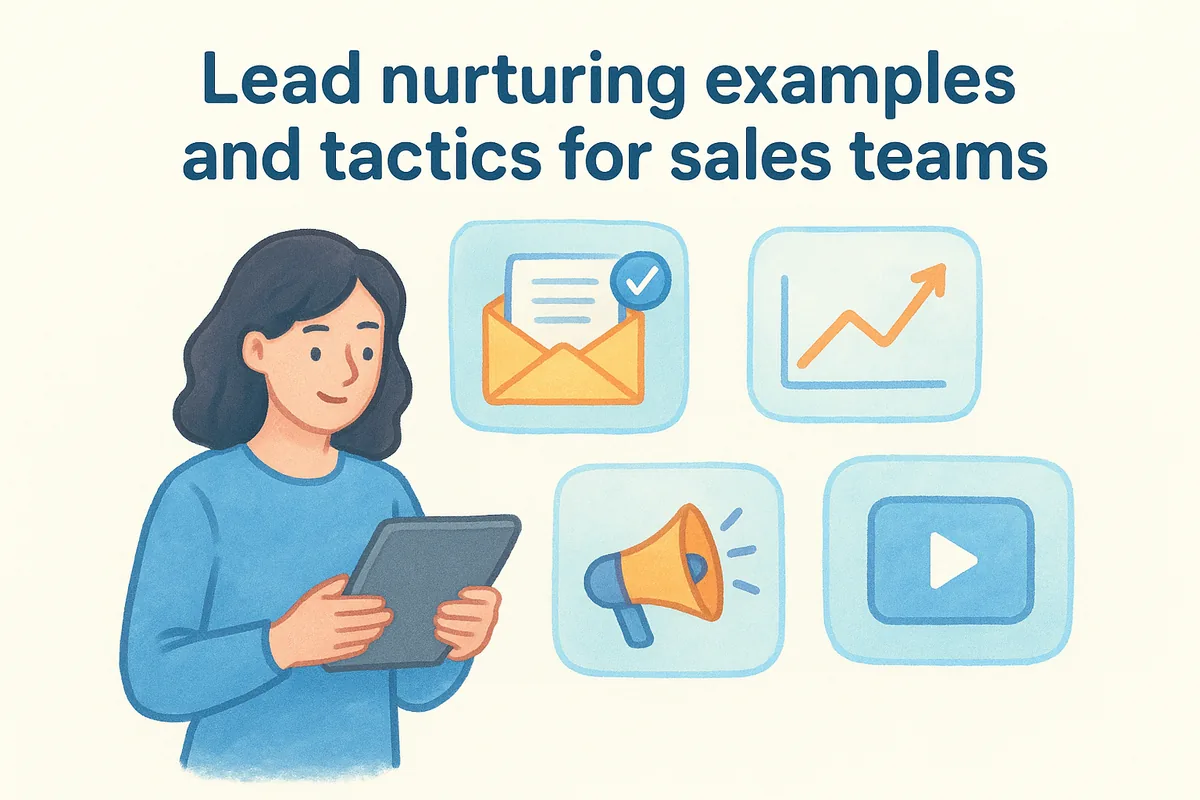
Theory only gets you so far. Seeing what actual nurture tactics look like in practice makes it easier to build sequences your own team will actually stick with. Below are five approaches that work across most B2B sales cycles, along with when to use each one.
The welcome and education drip
When a lead first converts through a lead form or gated download, don't jump straight to a pitch. Send a short welcome email confirming what they signed up for, followed by two or three educational emails spaced a few days apart. This sequence builds trust before it asks for anything, and it sets the tone for every email that follows.
The first email you send a new lead should teach, not sell.
The case study nudge
Once a lead has opened a couple of emails or revisited your pricing page, switch to social proof. A customer success story relevant to their industry does more to move a hesitant buyer than another feature list ever will. Pair it with a specific number, like a percentage increase in close rate or hours saved per week, so the proof feels concrete instead of vague.
The re-engagement sequence
Leads go quiet. That's normal, not a failure. A re-engagement sequence triggers after 14 to 21 days of no activity and asks a direct, low-pressure question: is this still a priority, or should we check back later? This single email often revives leads that looked dead, because it gives them an easy way to say "not yet" instead of just ignoring you again.
The multi-channel touch
Email alone misses people who scroll past every subject line. Layer in a LinkedIn comment, a retargeting ad, or a short personalized video from a rep. Vedain's LinkedIn automation tool lets you schedule posts that stay visible to prospects moving through a nurture sequence, so your name shows up somewhere other than their inbox too.
The behavior-triggered follow-up
Instead of sending every lead the same fixed schedule, trigger emails based on what they actually do. Someone who clicks a pricing link twice signals more intent than someone who opens an email and closes it. Behavior-based triggers let your sequence react in real time rather than running blind.
- •Trigger a pricing-focused email when a lead visits the pricing page more than once
- •Send a demo invite when a lead opens three or more emails in a sequence
- •Flag the lead for a rep call once engagement crosses your defined threshold
These five tactics cover most of what a sales team needs without requiring a dozen disconnected tools. Combined and automated through a single workflow builder, they turn a static list of contacts into a system that quietly does the follow-up work most teams never get around to doing manually.
Bringing generation and nurturing together
Getting lead generation vs lead nurturing right isn't about picking a favorite. It's about accepting that one without the other leaves revenue on the table. Generation without nurturing means paying for leads you let go cold. Nurturing without generation means polishing a pipeline that never grows. The teams that win treat both as one continuous motion, with a clear handoff point where marketing's job ends and sales' job begins, backed by automation that doesn't forget a follow-up because someone got busy.
You don't need five separate tools stitched together to run this well. You need one system tracking a lead from first form fill to closed deal, triggering the right sequence at the right moment without manual babysitting. That's the whole point of running generation and nurturing side by side instead of as competing priorities. Start your free Vedain trial and see how much easier both get when they live in one platform.
Frequently Asked Questions
What is the main difference between lead generation and lead nurturing?
Lead generation focuses on attracting and capturing new potential customers, while lead nurturing involves building relationships with those leads through targeted content and communication over time. Lead generation is the initial acquisition phase, whereas lead nurturing is the engagement phase that moves prospects closer to conversion. Most CRM platforms like HubSpot, Salesforce, and Pipedrive offer built-in tools for both functions, though they may require different feature sets and strategies.
How much does lead nurturing software cost compared to lead generation tools?
Lead nurturing and generation tools are typically bundled in CRM platforms rather than sold separately, with pricing ranging from free to enterprise levels. HubSpot's free CRM includes basic lead nurturing, while paid tiers start at $45/month; Salesforce's Sales Cloud begins at $165/month; Zoho CRM starts at $18/month; and Pipedrive ranges from $14-$99/month depending on features. Freshsales and Vedain offer competitive alternatives starting around $12-$15/month, making the choice dependent on your specific nurturing and generation needs rather than cost alone.
What metrics should I track for lead generation vs lead nurturing?
For lead generation, track metrics like cost per lead (CPL), lead volume, conversion rate to qualified leads, and ROI on acquisition campaigns. For lead nurturing, focus on engagement metrics such as email open rates, click-through rates, lead scoring progression, and time-to-conversion. Platforms like HubSpot and Salesforce provide built-in dashboards to monitor both sets of metrics, while Zoho and Pipedrive offer customizable reporting to align with your specific funnel stages.
Can I use the same CRM platform for both lead generation and lead nurturing?
Yes, most modern CRM platforms are designed to handle both lead generation and lead nurturing within a single system. HubSpot, Salesforce, Zoho, Pipedrive, Freshsales, and Vedain all integrate lead capture forms, email automation, and scoring workflows to support both functions. Using an all-in-one CRM eliminates data silos, improves lead tracking continuity, and allows you to seamlessly transition leads from generation to nurturing without manual data entry.
What automation features help with lead nurturing in CRM software?
Automation features that support lead nurturing include email sequences, lead scoring, behavioral triggers, and drip campaigns that engage prospects based on their actions. HubSpot offers workflow automation starting in its free tier; Salesforce provides Marketing Cloud for advanced automation; Zoho includes email templates and triggers at the $18/month tier; and Pipedrive offers conditional workflows to nurture leads based on deal stage. These features allow you to maintain consistent communication with prospects without manual intervention.
How long does the lead nurturing process typically take compared to lead generation?
Lead generation is typically a short-term process lasting days to weeks to capture new prospects, while lead nurturing can span weeks to months as you build trust and move leads through the sales funnel. The timeline varies by industry, product complexity, and sales cycle length; B2B software might require 3-6 months of nurturing, while B2C products may convert in 2-4 weeks. CRM tools like HubSpot, Salesforce, and Zoho include lead scoring and predictive analytics to help you identify when a nurtured lead is ready for sales handoff.