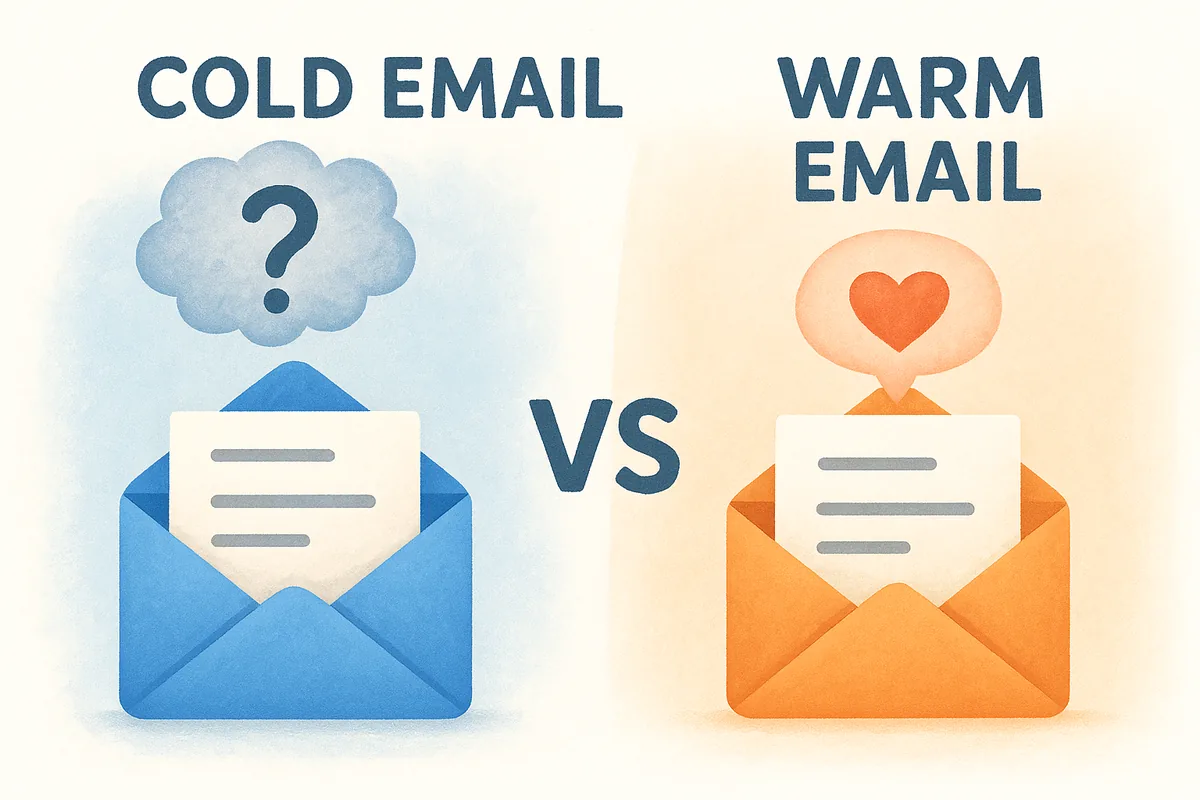
If you're trying to figure out which one actually gets replies, the short answer is that warm email wins on deliverability and response rates, but cold email is often unavoidable when you're prospecting new markets. The real skill is knowing how to warm up a cold domain before you rely on it for volume outreach, and how to keep a warm domain from cooling off.
In this article, we'll break down what separates cold from warm sending, walk through the use cases where each makes sense, and show you the deliverability mechanics behind conversion rates, so you can build an outreach strategy that doesn't burn your domain in the process.
Why the difference between cold and warm email matters
Getting this wrong costs you more than a missed reply. It costs you your domain reputation, and once that's damaged, every email you send afterward suffers, warm or cold. Mailbox providers like Gmail and Outlook track sending patterns per domain, and a fresh domain that suddenly blasts 500 emails a day looks like spam behavior even if your message is genuinely useful. That's the mechanical reason cold and warm email perform so differently, not just intent or copywriting.
The deliverability gap shows up in the numbers
Warm domains with established history get the benefit of the doubt from spam filters. Cold domains don't. Here's how the two typically compare when nothing else changes but sender history:
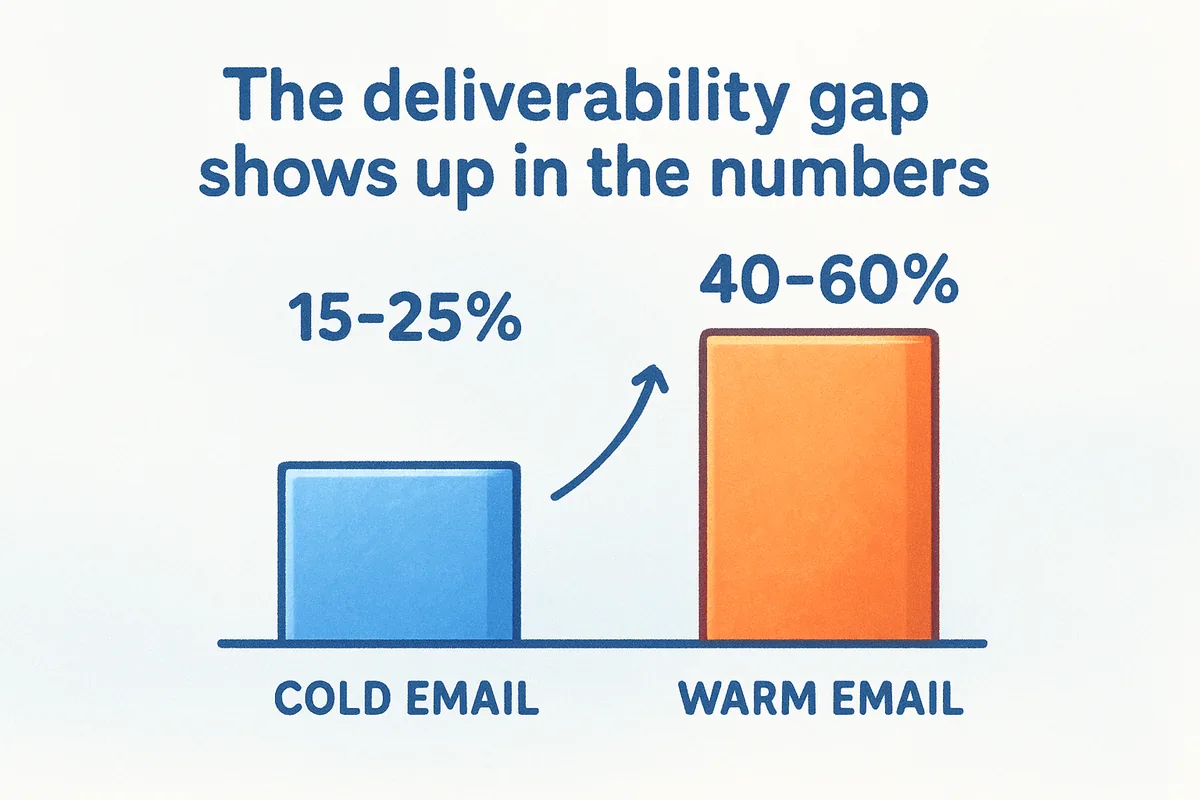
A warm domain can send 500 emails a day without blinking; a cold one might get flagged after 50.
Recovery from a burned domain is slow
If a cold domain gets blacklisted, you're not looking at a quick fix. Providers can take weeks to lift restrictions, and in the meantime every legitimate email you send, including replies to people who actually want to hear from you, risks landing in spam. That's why treating cold and warm sending as interchangeable is a mistake most teams only make once.
Warm email wins on trust, not scale
Warm email consistently pulls higher reply rates because the recipient already has context. Maybe they downloaded a resource, met you at an event, or replied to a previous thread. But warm lists are finite. You can't scale a business on warm contacts alone, which is why cold outreach still matters for pipeline growth, provided you protect your sending reputation while doing it. Understanding this tradeoff, speed and trust versus reach and risk, is what should shape every decision you make about which approach to use next.
How to choose between cold and warm email for your goals
Picking between cold and warm email starts with your actual goal, not your preference. If you're trying to fill a pipeline with net-new prospects, cold email is your only real option, but you need to warm up the domain first so it doesn't get torched in week one. If you're re-engaging leads who already know your brand, warm email will always outperform cold outreach for the same message.
Match the approach to the funnel stage
Early-funnel prospecting almost always calls for cold email, since you're reaching people with zero prior context. Late-funnel nurturing, follow-ups, and reactivation campaigns call for warm email, since you're leaning on existing trust to drive action. Mixing these up is a common mistake: sending cold-style pitches to a warm list feels tone-deaf, and sending warm-style familiarity to total strangers feels presumptuous.
Match the email to the relationship, not the other way around.
Use a simple checklist to decide
- •Does the recipient know your name or company already? Choose warm email.
- •Are you targeting a new list scraped or bought for prospecting? Choose cold email, but warm the domain first.
- •Do you need volume fast? Cold email scales faster but risks deliverability.
- •Do you need higher conversion rates per send? Warm email wins almost every time.
Running both cold and warm email vs each other on separate domains, rather than one shared domain, keeps your sending reputation protected no matter which strategy you're leaning on that quarter.
Cold email vs warm email examples side by side
Seeing the two side by side makes the difference obvious. A cold email has to earn attention with zero context, while a warm email can reference something real between you and the recipient. Here's what that looks like in practice.
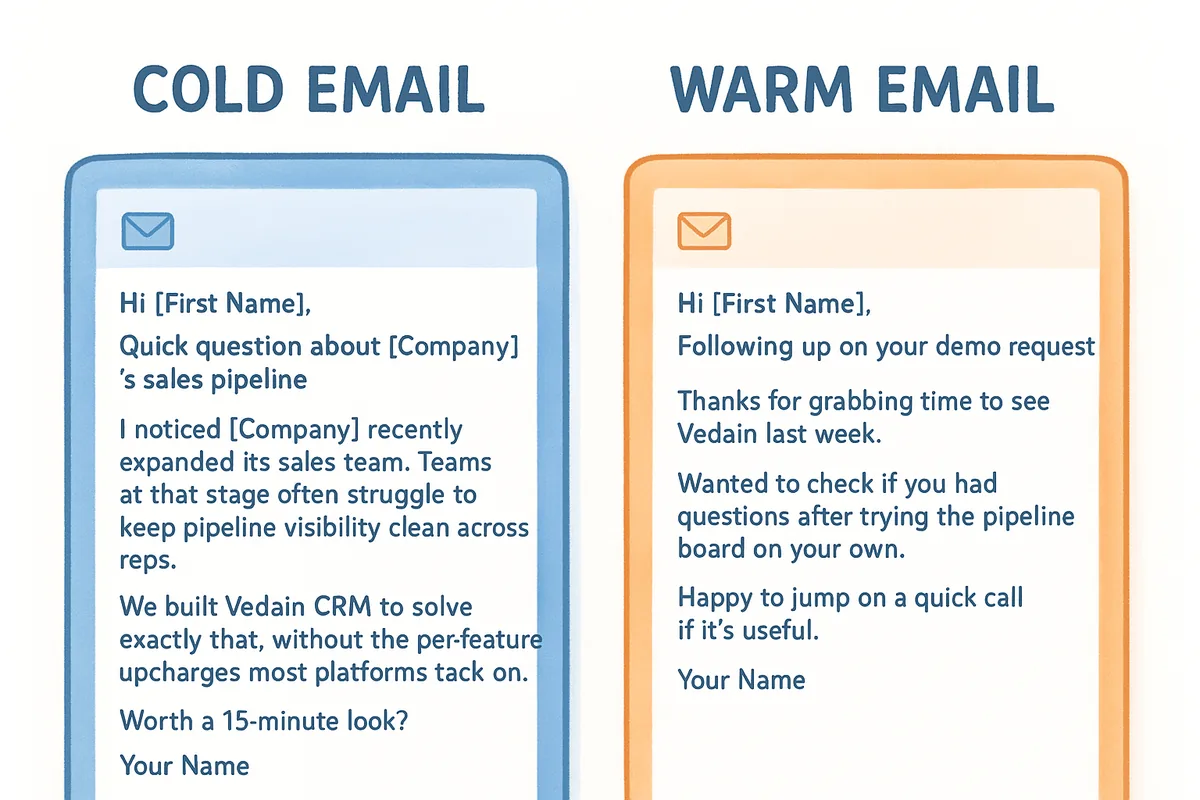
Cold email example
This version works for prospecting a list that's never interacted with your brand:
Warm email example
This version works when the recipient already has context, like a demo request or a past reply:
The cold email introduces a problem; the warm email continues a conversation.
Notice the tone shift. Cold outreach leads with relevance and a low-commitment ask. Warm outreach skips the pitch entirely and picks up where the relationship left off. Sending the cold version to a warm lead reads as forgetful, and sending the warm version to a stranger reads as presumptuous, which is exactly why matching the format to the relationship matters more than clever copy.
Best practices for higher reply rates with either approach
Both cold and warm email get better results when you treat the inbox as a relationship, not a delivery channel. Reply rates climb when your subject lines sound like they came from a person, not a marketing tool, and when your first sentence proves you actually looked at the recipient's company. Skip generic openers like "I hope this finds you well." They signal a template, and templates get deleted.
Warm up every domain before you scale
Cold domains need a runway. Sending low volume for the first two to three weeks, gradually increasing daily sends, teaches mailbox providers that your domain behaves like a real sender. Vedain's built-in email warmup handles this automatically with a gradual sending ramp, which matters if you're launching new domains for prospecting without babysitting the ramp-up yourself.
A domain that skips warmup is gambling its entire outreach budget on luck.
Keep lists clean and segmented
A bloated, unverified list tanks both cold and warm campaigns equally, since bounces and spam complaints hurt deliverability regardless of context. Segment by intent, funnel stage, and prior engagement so each email actually matches the recipient's relationship to your brand.
- •Verify emails before every send, not just once a quarter
- •Personalize the first two lines using real details about the recipient
- •Keep cold sends under 50 per domain daily until warmup finishes
- •Track replies, not just opens, since opens can be inflated by image tracking
Getting these fundamentals right does more for your numbers than any subject line trick ever will.
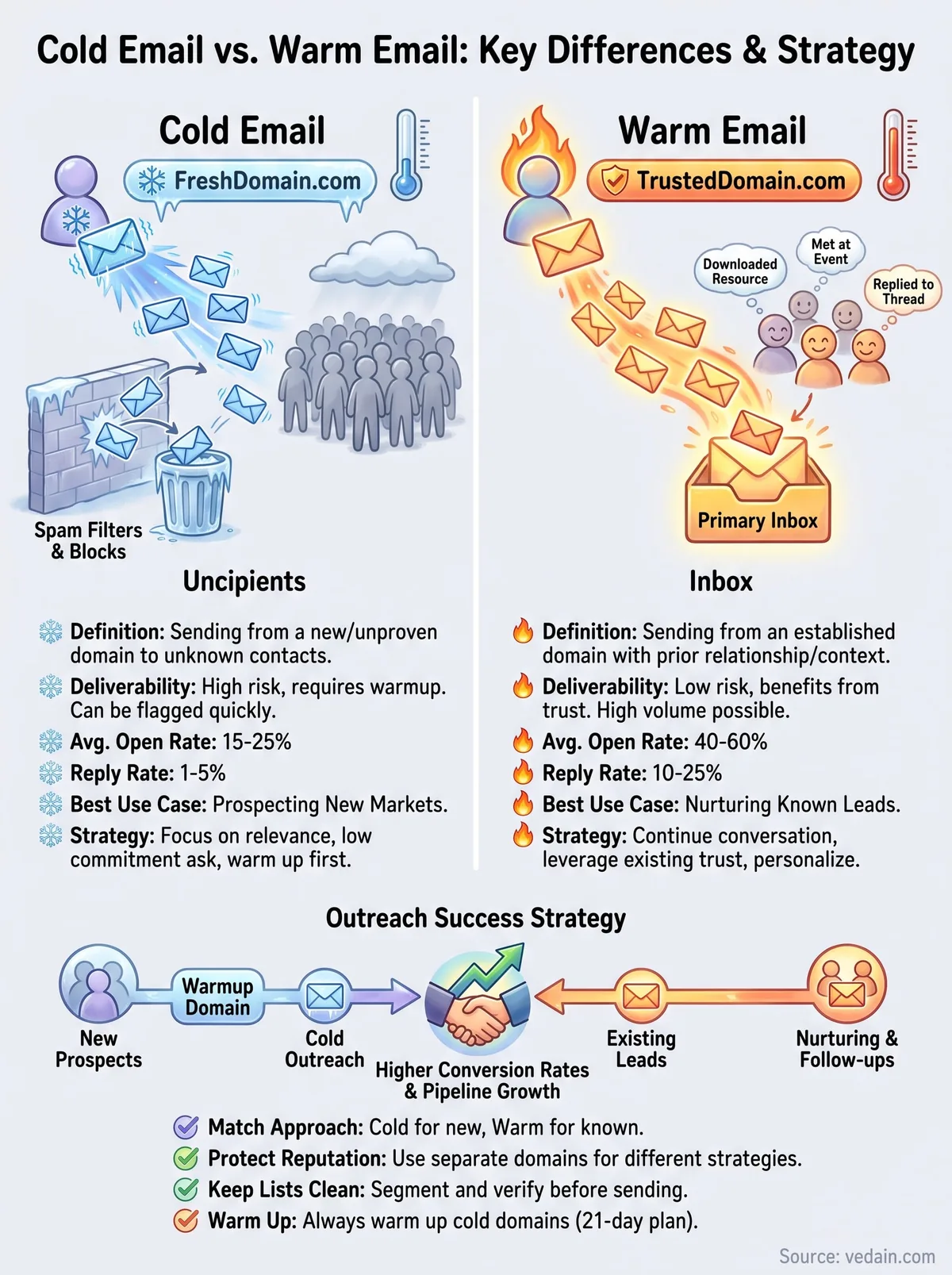
Finding the right mix for your outreach
Most sales teams don't need to pick one side of cold email vs warm email forever. You need both, running on separate domains, each doing the job it's actually good at. Cold email fills the pipeline with new prospects. Warm email closes the loop with people who already trust you. Trying to force one approach to do both jobs is why so many campaigns underperform.
Realistically, your split will shift as your list grows. Early on, expect to lean cold since you don't have a warm list yet. Over time, that ratio flips as replies, demos, and referrals build your warm pool.
What matters is protecting deliverability while you scale, not guessing at ratios. Vedain CRM handles the warmup, sequencing, and tracking in one place, so you can run a free trial and see which mix actually converts for your list.
Frequently Asked Questions
What is the difference between cold email and warm email in sales?
Cold email is unsolicited outreach to prospects with no prior relationship, while warm email is sent to leads who have shown interest or have a connection to you. Cold emails typically have lower open rates (1-5%), whereas warm emails average 20-50% open rates. Most CRM platforms like HubSpot, Salesforce, and Pipedrive recommend starting with warm outreach strategies when possible to improve conversion rates.
What is the average cold email open rate and response rate?
Cold emails typically achieve a 1-5% open rate and a 0.5-2% response rate depending on industry and personalization level. However, highly personalized cold emails with strong subject lines can reach 10-15% open rates. Sales teams using CRM tools like Freshsales and Zoho to segment audiences and A/B test subject lines see significantly higher engagement on their cold outreach campaigns.
Is cold email or warm email better for B2B sales?
Warm email is generally more effective for B2B sales, delivering 30-50% higher response rates than cold email. However, cold email remains valuable for reaching new prospects at scale when personalized and compliant with regulations like CAN-SPAM. Most B2B teams using HubSpot, Salesforce, or Vedain CRM start with warm email sequences and use cold email strategically to expand their prospecting pipeline.
How can I improve my cold email open rates and response rates?
Improve cold email performance by personalizing subject lines to reference the prospect's company or role, keeping emails concise (50-125 words), and including a clear call-to-action. A/B testing subject lines, sending times, and email copy can increase open rates by 20-40%. CRM platforms like Pipedrive and Freshsales provide built-in analytics and automation tools to test variations and identify what resonates with your target audience.
What is the best CRM for managing cold email campaigns?
HubSpot, Salesforce, and Zoho all offer robust cold email management with built-in templates, tracking, and automation features. Pipedrive is particularly strong for sales teams focused on conversion tracking, while Freshsales provides affordable cold email tools starting at $15/month with good deliverability features. For dedicated cold email features, Vedain integrates well with most CRMs and offers advanced personalization and compliance tracking.
Are cold emails legal and compliant with CAN-SPAM regulations?
Cold emails are legal if they comply with CAN-SPAM Act requirements, including a clear subject line, sender identification, opt-out mechanism, and physical address. Most CRM platforms like HubSpot, Salesforce, and Zoho have built-in compliance features to ensure your cold email campaigns meet these standards. Failure to comply can result in fines up to $43,280 per violation, making compliance monitoring through your CRM essential for large-scale cold outreach.