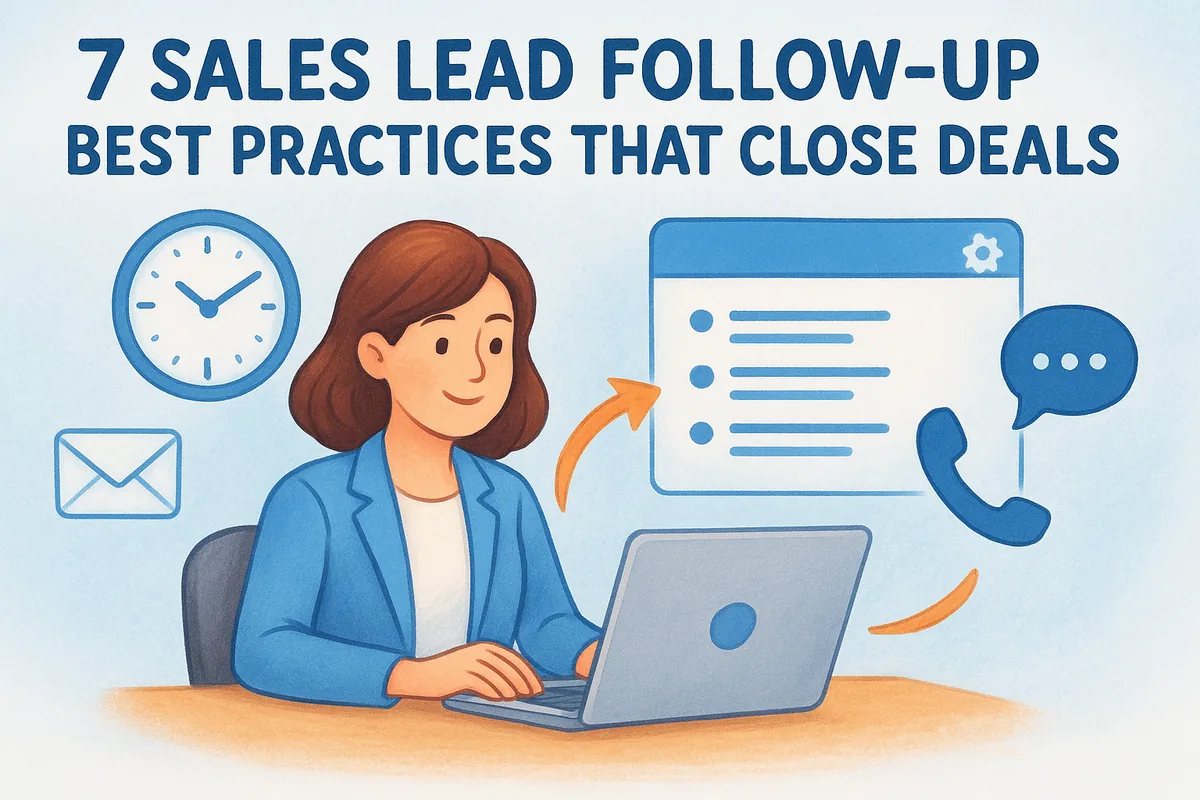
This article gives you the concrete answer: seven tested tactics covering follow-up timing, message sequencing, channel mixing, and the kind of persistence that converts instead of annoying prospects. No vague advice about "staying top of mind" without telling you how.
We'll walk through what to send, when to send it, and how many touches it actually takes before a lead either buys or tells you no. Along the way, you'll see how tools like automated sequences and pipeline tracking, the kind built into Vedain CRM, take the manual guesswork out of follow-up consistency so your team executes these practices every time, not just when someone remembers to.
1. Centralize and automate follow-ups with a CRM
Spreadsheets and sticky notes work fine until you have more than a handful of leads. Once your pipeline grows past ten or fifteen open deals, manual tracking becomes the reason leads slip through the cracks. A CRM gives every lead a home, a status, and a next action, so follow-up stops depending on memory and starts depending on a system.
Why it matters
Leads go cold the moment they feel forgotten, and forgetting is exactly what happens when follow-up lives in someone's head instead of a shared system. Centralizing your pipeline means any rep can open a record and know instantly what's been said, what's due, and what comes next. This is the foundation of the rest of this list. Every other tactic here, timing, cadence, personalization, only works if you have a reliable place to schedule and track it.
A CRM doesn't replace good follow-up, it makes good follow-up possible at scale.
How to implement it
Setting this up doesn't require a big IT project. Here's the basic sequence:
- Import your leads into a CRM with clear fields for source, stage, and last contact date.
- Set follow-up tasks automatically when a lead enters or changes stage, instead of relying on reps to create them manually.
- Sync your email so every call and message logs against the lead record without extra data entry.
- Build one or two automated sequences for your most common lead types, so a new inquiry gets a reply even before a rep touches it.
Vedain CRM handles steps two through four out of the box: workflows trigger follow-up tasks and email sequences the moment a lead hits a pipeline stage, and two-way Gmail and Outlook sync keeps every touchpoint logged without anyone copying and pasting.
Common mistakes to avoid
Teams often buy a CRM and then use it like a digital rolodex, storing contact info but never automating the follow-up tasks that make it useful. Others go the opposite direction and automate everything, including messages that should stay personal, which reads as robotic fast. Watch for these specific traps:
- •Letting leads sit in a stage with no assigned next action or owner
- •Setting up sequences once and never reviewing which ones actually convert
- •Choosing a CRM with pricing tiers that gate automation behind an expensive plan, which quietly discourages teams from using it fully
2. Respond to new leads within minutes, not hours
Speed beats almost everything else on this list. A lead who just filled out a form or replied to an ad is thinking about your product right now. Wait three hours and you're competing with whatever else grabbed their attention since then, including a competitor who called first. Response speed is the cheapest lever you have, and most teams still pull it too slowly.
Why it matters
Research from Harvard Business Review found that companies contacting leads within an hour were nearly seven times more likely to qualify them than those waiting even slightly longer. Your prospect's intent decays fast, and every hour of delay hands the deal to whoever moves first. This is the single tactic on this list with the clearest, most-cited data behind it, which is why it belongs near the top.
The first vendor to respond usually wins the deal, not the best vendor.
How to implement it
Getting fast without burning out your team means combining automation with clear ownership:
- •Trigger an instant auto-reply the moment a lead form submits, confirming you got it and setting expectations for a human follow-up.
- •Route new leads to a specific rep automatically, so nobody's waiting for someone to "check the queue."
- •Set a team-wide response SLA, like 15 minutes during business hours, and track it as a real metric.
- •Use mobile alerts for high-value leads so reps can respond from anywhere.
Vedain CRM's lead forms and workflows can fire that first reply automatically and assign the lead in the same motion, so the clock starts working for you instead of against you.
Common mistakes to avoid
Speed without substance backfires. An instant auto-reply that never gets followed by a real human message feels hollow within a day. Reps also sometimes respond fast with a generic script, which signals a mass-production process rather than genuine interest in the lead's specific situation.
3. Reach out across multiple channels
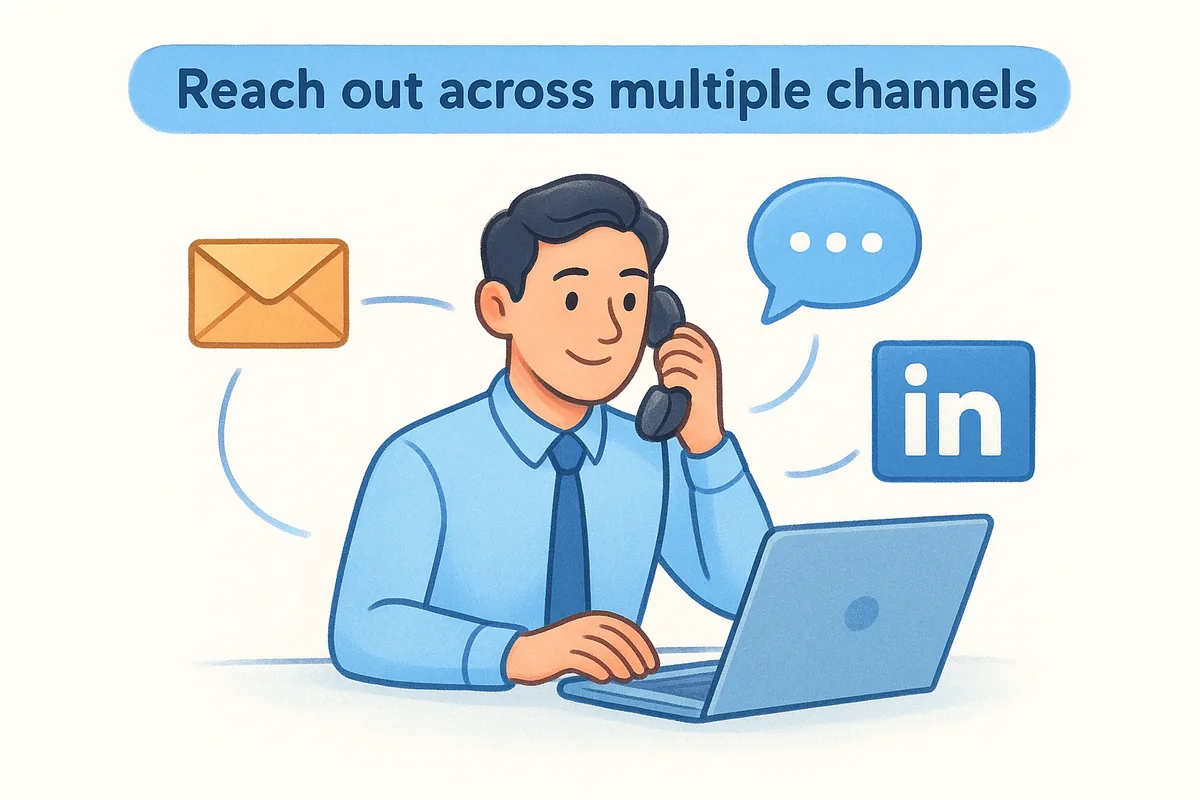
Email alone isn't enough anymore. Some leads read email religiously, others ignore it until a phone call or LinkedIn message pushes them to check their inbox. Multi-channel outreach catches leads where they actually pay attention instead of betting everything on one inbox that might be filtered, muted, or full.
Why it matters
Each channel carries a different signal and reaches people at different moments of their day. A call shows urgency, an email gives them something to reference later, and a LinkedIn comment or message feels less transactional than either. Relying on just one channel means you're guessing at a preference you haven't confirmed, and that guess costs you leads who would have responded elsewhere. Good sales lead follow up best practices always assume the first channel might fail and plan a second one before it does.
If a lead doesn't answer one channel, that's a cue to switch, not to give up.
How to implement it
Build a simple rotation instead of repeating the same email three times:
- Email first for the paper trail and detail.
- Call within a day if there's no reply, especially for higher-value leads.
- Connect on LinkedIn and engage with their posts to stay visible without pressure.
- Text only if the lead already gave you that channel's permission.
Vedain CRM logs calls, emails, and LinkedIn activity against the same lead record, so switching channels never means losing context on what's already been said.
Common mistakes to avoid
Hitting every channel on the same day feels like harassment, not outreach. Skip channels the lead hasn't authorized, like personal texts from a form that only asked for email, and space channel switches by at least a day.
4. Personalize every message you send
Generic templates get generic results. A message that opens with "Hi [First Name], I wanted to follow up" tells the lead they're one of a hundred names in a batch send. Genuine personalization means referencing something specific: the page they visited, the question they asked on a call, or the problem they mentioned in a demo. That small detail is often the difference between a reply and a delete.
Why it matters
Buyers can spot a mass email in the first sentence, and once they do, they stop reading. Personalized follow-ups signal that a real person is paying attention to their specific situation, not running them through a funnel. This matters most in the middle of your sequence, after the initial reply, when a lead is deciding whether you're worth their continued time.
A personalized line beats a polished template every time.
How to implement it
Personalization doesn't require writing every email from scratch. Build a system that mixes automation with real detail:
- •Pull one specific fact from your CRM notes into every message, like the exact feature they asked about.
- •Reference their industry or company size when relevant to the pitch.
- •Keep templates as a starting structure, not a finished product.
- •Note personal details from calls, like a mentioned deadline, and use them in the next touch.
Vedain CRM's custom fields and notes make that detail searchable, so any rep can personalize a follow-up without digging through old call recordings.
Common mistakes to avoid
Inserting a first name into a template isn't personalization, it's a mail merge. Avoid referencing details that are stale or wrong, like a job title the lead already left. And don't over-personalize to the point of sounding intrusive, referencing something they'd expect you to have forgotten.
5. Add value with every touchpoint
A follow-up that just asks "any updates on your end?" gives the lead nothing to respond to. Every message you send should hand them something useful: a relevant case study, a quick answer to a question they raised, or a new insight about their industry. Value-driven follow-up turns a nagging check-in into a reason to actually open your email.
Why it matters
Leads ignore messages that feel like pressure and respond to messages that feel like help. If your only follow-up content is "checking in," you're training the lead to associate your name with a nudge instead of a resource. Adding value at each touch resets that association and gives the lead a reason to keep the conversation open, even when they're not ready to buy yet.
If your follow-up doesn't teach, solve, or clarify something, skip it.
How to implement it
Build a small library of value-add content you can drop into follow-ups without starting from scratch each time:
- •Customer case studies relevant to the lead's industry or company size
- •Short answers to objections they raised on a call, sent as a quick follow-up email
- •A relevant blog post, benchmark, or stat that ties directly to their stated goal
- •An invite to a webinar or product update relevant to their use case
Vedain CRM's notes and custom fields help you track which pieces of content you've already sent so you're not repeating the same case study three times.
Common mistakes to avoid
Don't send value that's generic enough to apply to anyone, that defeats the purpose. Skip attaching heavy PDFs that never get opened, and avoid disguising a sales pitch as "just sharing something helpful" when it's clearly neither.
6. Space out follow-ups with a clear cadence
Random timing kills momentum. Send three emails in one day and you look desperate. Wait three weeks between touches and the lead forgets who you are. A defined follow-up cadence removes the guesswork, telling every rep exactly when the next touch happens instead of leaving it to whoever remembers first.
Why it matters
Consistency builds trust, and gaps break it. Leads who hear from you on a predictable rhythm start to expect your next message instead of being surprised by it, which keeps your name from feeling like spam. A clear cadence also protects your team from the two failure modes that kill deals: going silent for weeks or flooding an inbox in a single day. Solid sales lead follow up best practices always specify timing, not just content.
A predictable cadence feels like service. A random one feels like spam.
How to implement it
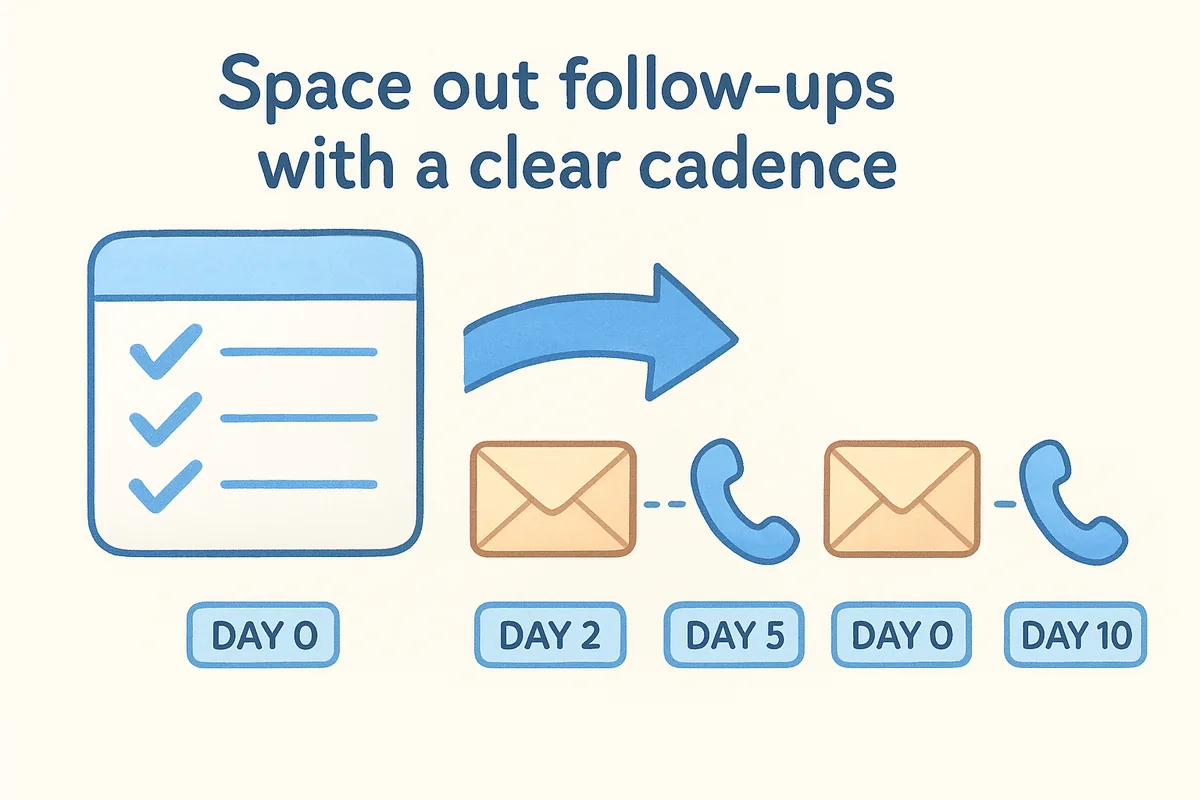
A simple cadence for a warm inbound lead might look like this:
Adjust the pace for deal size: enterprise leads can tolerate longer gaps, small self-serve leads need faster touches before interest fades. Vedain CRM's workflow builder lets you set this exact schedule once per lead type, so tasks fire automatically on the right day without a rep tracking dates by hand.
Common mistakes to avoid
Teams often build a cadence, then abandon it the moment a rep gets busy, leaving some leads on Day 2 forever. Others copy a generic cadence from a blog post without adjusting for their own sales cycle length. Review your cadence's actual reply and close rates quarterly, not just once at setup.
7. Know when to send the break-up email
At some point, silence means no, even if the lead never says it outright. A break-up email tells the lead you're closing the loop, which sounds counterintuitive but often gets more replies than the five polite check-ins before it. Ending the sequence isn't giving up, it's the last tactic in good sales lead follow up best practices that actually respects the lead's time and yours.
Why it matters
Endless follow-up without a stopping point wastes rep hours on leads who already decided no and just haven't said it. A clear exit point also triggers something psychological: people who ignored five emails often reply to the sixth because it removes pressure and makes saying no easy. Without this step, dead leads sit in your pipeline forever, inflating numbers that don't reflect reality.
Sometimes the email that says "I'll stop reaching out" is the one that finally gets a reply.
How to implement it
Time the break-up email after your defined cadence runs its course, usually five to seven touches over two to three weeks:
- •Keep it short, under five sentences, with no guilt or pressure.
- •State plainly that you'll stop reaching out and leave the door open for later.
- •Ask one direct question: is this a no, or just not now?
- •Move the lead to a nurture stage instead of deleting the record entirely.
Vedain CRM's workflows can automatically shift a lead to a long-term nurture sequence once the break-up email goes out, so the contact stays in your system without cluttering your active pipeline.
Common mistakes to avoid
Don't send a break-up email disguised as another sales pitch, that defeats its purpose entirely. Skip the passive-aggressive tone some templates use, it reads poorly. And never delete the lead outright, since a soft no today often turns into a yes in six months.
Building a follow-up habit that wins deals
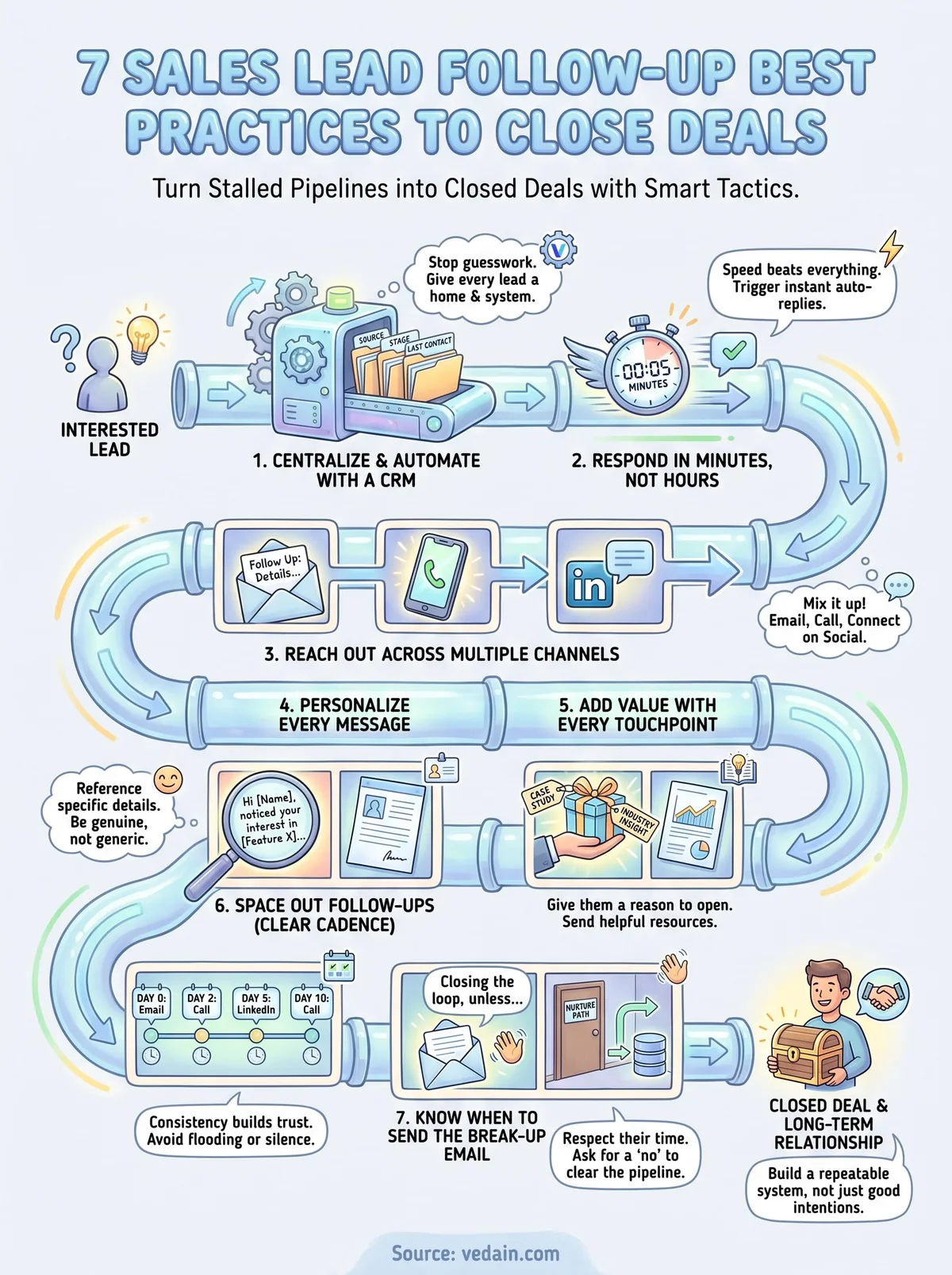
None of these seven tactics work in isolation. Fast response times mean little without a cadence to back them up, and personalization falls flat if you're not tracking what you've already said. The real win comes from stacking them together into one repeatable process your whole team runs the same way, every time, on every lead.
That's the part most teams get wrong. They know the best practices but rely on memory and good intentions to execute them, which fails the moment someone gets busy. A system that automates the mechanics frees your reps to focus on the parts that actually need a human, like the personal detail or the well-timed call.
If you're ready to stop losing leads to slow replies and missed touches, see how Vedain CRM handles it for you.
Frequently Asked Questions
How many times should you follow up with a sales lead before giving up?
Most sales professionals recommend 5-7 follow-ups before considering a lead unresponsive, with the sweet spot being around 5 touches within 2 weeks. Research shows that 80% of sales require 5+ touchpoints, yet 44% of sales reps give up after just one follow-up. CRM platforms like HubSpot, Salesforce, and Pipedrive help automate this process, with Pipedrive's follow-up sequences starting at $12.50/user/month and HubSpot's Sales Hub at $50/month, ensuring no lead falls through the cracks.
What is the best time of day to follow up with sales leads?
The optimal follow-up window is Tuesday through Thursday between 10 AM and 2 PM, when decision-makers are most likely to respond. Studies show Tuesday at 10 AM has the highest open rates (around 45%), while emails sent on weekends see response rates drop by 60%. Zoho CRM ($20/user/month) and Freshsales ($15-65/user/month) offer send-time optimization features that automatically schedule follow-ups during peak engagement hours for your specific audience.
What should you say in a follow-up email to a sales lead?
Your follow-up email should reference your previous conversation, provide new value, and include a specific call-to-action without being pushy. Keep it to 3-5 sentences, personalize it with the lead's name and company details, and focus on their pain points rather than your product features. Tools like HubSpot and Vedain include email templates and merge fields to personalize at scale, while Salesforce's Einstein features can even suggest optimal messaging based on historical conversion data.
How can CRM software improve sales lead follow-up rates?
CRM software automates follow-up reminders, tracks all customer interactions, and provides visibility into which leads need attention, dramatically increasing response rates by 25-50%. Platforms like Pipedrive ($12.50-99/user/month), Freshsales ($15-65/user/month), and HubSpot Sales Hub ($50/month+) automatically log emails, calls, and meetings while sending you task reminders to follow up at the right time. Zoho CRM includes workflow automation starting at $20/user/month, allowing you to trigger follow-up sequences based on lead behavior without manual intervention.
Should you use phone calls or emails for sales lead follow-ups?
The best approach combines both: use phone calls for warm leads and higher-value prospects, while emails work better for initial follow-ups and nurturing larger lists. Phone calls have a 6% connection rate but yield higher-quality conversations, while emails have lower response rates (5-10%) but let you reach more people efficiently. Most professional sales teams using Salesforce, HubSpot, or Pipedrive employ a multi-channel strategy, with these platforms integrating phone, email, and SMS capabilities to ensure leads are reached through their preferred communication channel.
What metrics should you track to measure sales lead follow-up effectiveness?
Key metrics include response rate, follow-up-to-conversion rate, average time-to-close, and cost-per-deal-closed. You should also monitor email open rates, click-through rates, and how many follow-ups it takes to close each deal. CRM platforms like Salesforce and HubSpot provide built-in dashboards tracking these KPIs in real-time, while Pipedrive's visual pipeline ($12.50/user/month) and Freshsales' advanced analytics help you identify which follow-up strategies generate the highest ROI so you can optimize your sales process continuously.