This guide skips the fluff and gets straight to what matters: which platforms actually handle client communication and project tracking the way a design business needs, without charging you extra for basic features like email sync or automation. We tested pricing structures, pipeline visuals, and workflow automation tools across the top contenders so you don't have to.
Below you'll find eight CRMs worth considering in 2026, including Vedain, a flat-rate platform built for teams tired of feature gates and surprise fees. Each entry breaks down pricing transparency, standout features, and the type of design business it fits best, so you can pick a system that supports your studio instead of adding another tool to manage.
1. Vedain CRM
Most general-purpose CRMs weren't built with design studios in mind, but Vedain CRM works well for interior designers precisely because it doesn't try to be industry-specific software with rigid templates. Instead, it gives you a flexible sales pipeline, custom fields for tracking room dimensions or vendor details, and automation that handles the repetitive follow-ups eating into your design time. Studios juggling multiple projects at once appreciate that every feature ships in one plan, so you're not stuck upgrading mid-project just to unlock a feature you already assumed you had.
Key features
Vedain's deal pipeline uses a visual Kanban board, so you can see exactly which clients are in the consultation stage versus contract signing at a glance. Two-way email sync with Gmail and Outlook means every client conversation stays logged automatically, no manual forwarding required. The no-code workflow builder lets you automate things like sending a follow-up email three days after a proposal goes out, or assigning a task when a deal moves to "in progress." You also get lead capture forms and custom dashboards to track sales targets, plus an AI Agent Marketplace with over 30 pre-built agents that can handle content generation or data enrichment without hiring extra staff.
Pricing
Vedain charges a flat $10 per user per month, and that price includes everything: automation, email sync, unlimited records, and email warmup. There's no tiered pricing model, no add-on fees for reporting, and no credit card required to start a trial.
A CRM shouldn't punish you for growing, and Vedain's flat rate means your bill stays predictable no matter how many deals or contacts you add.
Compare that to what competing CRMs charge once you add tiers that gate automation or reporting behind a "professional" or "enterprise" plan, and the savings add up fast for a five-person studio watching every dollar.
Best for
Small to mid-sized interior design studios that want project management and sales tracking in one place, without paying extra as their client list grows, will find Vedain the strongest fit. It also suits teams currently priced out of tools like HubSpot or Salesforce but who still want automation and AI CRM features for small teams, not just a stripped-down basic plan. If your studio runs on Gmail or Outlook and wants setup done in under five minutes rather than a multi-week onboarding process, Vedain fits that workflow directly.
2. Dubsado
Dubsado built its reputation among photographers and event planners before design studios adopted it, and that history still shows in how the platform handles client-facing paperwork. It leans heavily on contracts and invoicing rather than a sales pipeline, which makes it a solid pick for designers who spend more time chasing signatures than tracking leads through a funnel. Many solo designers and small studios use it as their main client management software for interior designers, especially once a project moves past the initial consultation.
Key features
Dubsado's workflow templates let you build a client journey from inquiry to final invoice, complete with scheduled emails and forms triggered automatically. You get proposal and contract templates with e-signatures built in, a scheduler for booking consultations, and time tracking for billing hourly design work. Its form builder is flexible enough to capture project details like room measurements or style preferences right at intake.
Pricing
Dubsado charges $20 per month or $200 per year for its Starter plan, with the full Premier plan running $40 per month or $400 per year once you need unlimited clients and advanced automation.
Dubsado rewards designers who need paperwork automation more than pipeline visibility.
Best for
Freelance interior designers and small studios that prioritize contracts, invoicing, and client onboarding software over deal-stage tracking will get the most value here. It suits solo practitioners more than growing sales teams, since the pipeline tools feel like an afterthought compared to its document automation.
3. HoneyBook
HoneyBook markets itself as an all-in-one platform for creative entrepreneurs, one of several CRMs built for creative businesses, and interior designers make up a sizable chunk of its user base. The platform leans into client experience with a polished, branded portal where clients can view proposals, sign contracts, and pay invoices without leaving one interface. Unlike Dubsado's more DIY feel, HoneyBook packages its automation and templates into a cleaner, more guided setup that appeals to designers who don't want to build workflows from scratch.
Key features
HoneyBook's automated workflows trigger emails, tasks, and invoices based on where a client sits in your process, from inquiry to project completion. Its scheduling tool syncs with your calendar for consultations, and the payment processing handles deposits and installment plans directly inside the platform. You also get a mobile app for managing client messages on-site, plus reporting that tracks booking rates and revenue by project type.
Pricing
HoneyBook's Starter plan runs $29 per month, the Essentials plan costs $49 per month, and the Premium plan jumps to $109 per month, all billed annually for the lowest rates.
HoneyBook charges more as your client volume grows, so budget-conscious studios should map their invoicing needs before committing to a tier.
Best for
Solo designers and small studios that prioritize a branded, seamless client management software for interior designers experience over deep pipeline customization will appreciate HoneyBook's polish. It suits teams already comfortable paying a premium for design and simplicity rather than flat-rate transparency.
4. Houzz Pro
Houzz Pro grew out of the massive Houzz marketplace, so it carries a built-in advantage no other tool on this list can match: direct exposure to homeowners already browsing for design help. That marketplace connection shapes the whole platform, blending project management with lead generation in a way that feels more like a business suite than a pure sales CRM. Designers who already list projects on Houzz often adopt Pro simply because their client data already lives there.
Key features
Houzz Pro's 3D floor plan tool lets you sketch layouts and share them with clients directly inside a proposal, which cuts down on back-and-forth over separate design software. Client invoicing connects to QuickBooks, so billing and bookkeeping stay in sync without manual entry. You also get a project management dashboard for tracking timelines, a mobile app for site visits, and lead tracking pulled straight from your Houzz marketplace profile.
Pricing
Houzz Pro starts around $99 per month for the Essential plan, with higher tiers running $299 or more per month depending on team size and marketing features included.
Houzz Pro's price reflects its marketplace reach, so studios paying for it should actually be pulling leads from Houzz to justify the cost.
Best for
Established studios that already generate business through the Houzz marketplace, and want their project management and invoicing tied to that same ecosystem, get the most value here. It suits firms with steady project volume more than solo designers just starting to build a client base, since the pricing sits well above flat-rate alternatives.
5. Programa
Programa built its platform specifically for interior designers, and that focus shows in details generic CRMs never bother with, like tracking FF&E specifications or generating client-ready presentation boards. The tool leans hard into procurement management, letting you track product sourcing, budgets, and vendor orders alongside client communication in a single dashboard. Studios that spend as much time specifying furniture as they do closing deals often find Programa fits their daily workflow better than a sales-first CRM ever could.

Key features
Programa's specification tool lets you build product boards with pricing, lead times, and vendor details, then export them straight into client-facing presentations. Its budget tracking compares estimated versus actual spend per room, which matters when a client asks why the sofa costs more than the quote. You also get purchase order generation, a shared client portal for approvals, and project timelines that map out installation dates alongside procurement deadlines.
Pricing
Programa runs on a tiered structure starting around $79 per month for solo designers, with team plans climbing past $199 per month depending on user count and procurement volume.
Programa's pricing reflects specialization, so studios not managing heavy procurement may be paying for tools they'll rarely open.
Best for
Interior design studios juggling significant furniture and product procurement, where tracking vendor orders matters as much as tracking leads, get the clearest value from Programa. It suits established firms with dedicated purchasing workflows more than solo designers focused primarily on client management software for interior designers basics like proposals and follow-ups.
6. Mydoma Studio
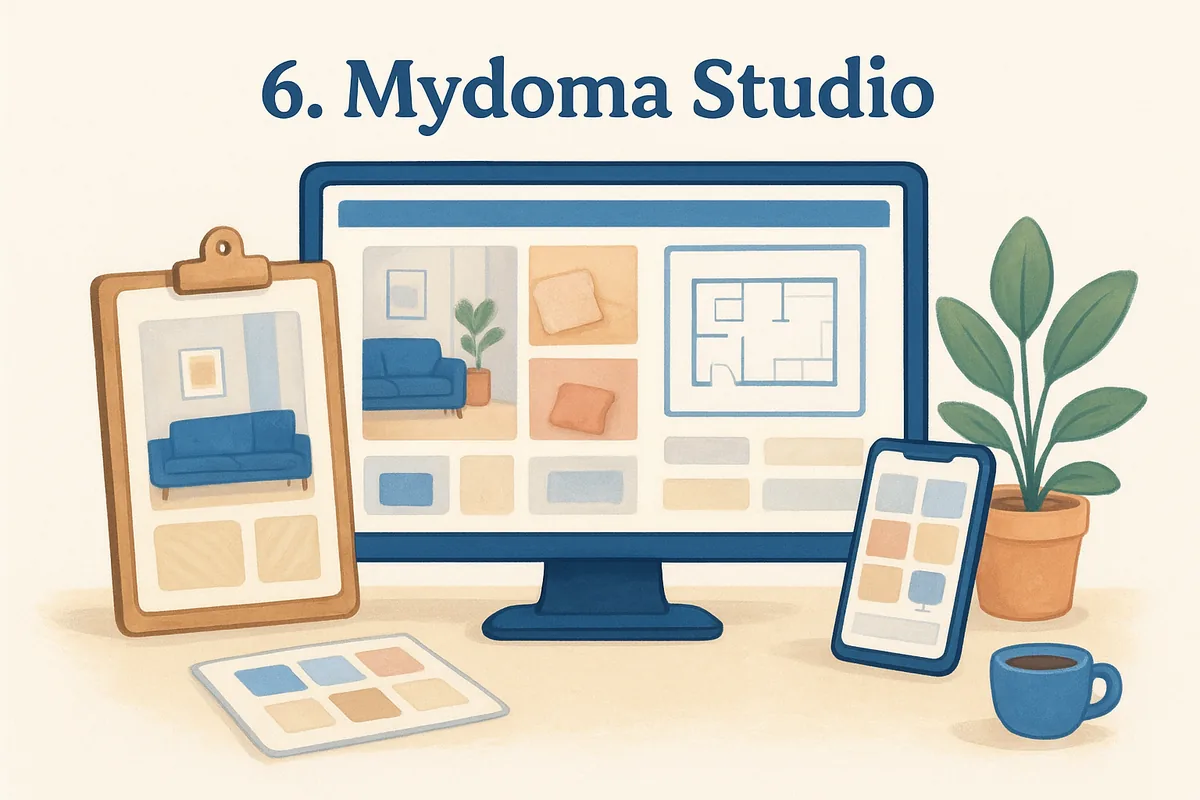
Mydoma Studio positions itself as a design business hub built specifically for the interior design trade, and it shows in how tightly it links client presentations with product sourcing. The platform started as a mood board tool before expanding into full project management, so its visual side still feels more polished than most sales CRMs on this list. Designers who care about how a proposal looks to a client, not just how it moves through a pipeline, tend to gravitate toward Mydoma.
Key features
Building on that visual strength, Mydoma's mood board and floor plan tools let you drag in products, fabrics, and finishes to create client-ready presentations without switching apps. Its product catalog connects to thousands of vendors, so you can add items with pricing and lead times already attached. You also get client portals for approvals, time tracking for billable hours, and basic invoicing tied to project milestones rather than a full sales pipeline.
Pricing
Mydoma Studio starts at $18 per month for a Solo plan, moves to $39 per month for Studio, and reaches $99 per month for the Team plan with multiple seats and expanded storage.
Mydoma charges for polish and product sourcing, not pipeline automation, so weigh that trade-off before switching from a sales-focused CRM.
Best for
Solo designers and small studios that prioritize client presentations and product sourcing over deal tracking will find Mydoma's visual tools worth the cost. It suits firms already comfortable managing leads elsewhere but wanting a dedicated space for mood boards and vendor catalogs.
7. Studio Designer
Studio Designer built its name on the accounting side of interior design long before CRM features became standard, and that history still defines the platform today. It targets firms that need procurement management paired with serious bookkeeping, not just a pipeline to track leads. Designers who bill on markup, track purchase orders line by line, and reconcile vendor invoices monthly tend to outgrow lighter tools and land here.
Key features
Studio Designer's specification module tracks every item from initial quote to final installation, including markup calculations and vendor payment status. Client billing ties directly into its accounting engine, so invoices reflect actual costs plus your markup without manual recalculation. You also get purchase order tracking, a document library for storing tear sheets and contracts, and reporting built around project profitability rather than deal-stage conversion.
Pricing
Studio Designer starts at $95 per month for the Essential plan, with the Team plan running $145 per month and the Business plan reaching $225 per month for firms needing multiple users and advanced accounting features.
Studio Designer's pricing assumes you need accounting depth, so firms without heavy procurement will overpay for tools they rarely touch.
Best for
Established interior design firms with dedicated procurement and bookkeeping needs, where tracking markup and vendor payments matters as much as managing a sales pipeline, get the most value from Studio Designer. It suits firms with an in-house bookkeeper or office manager more than solo designers or small studios still building their client base, since the pricing and complexity outpace what a two-person shop typically needs.
Finding the right fit for your studio
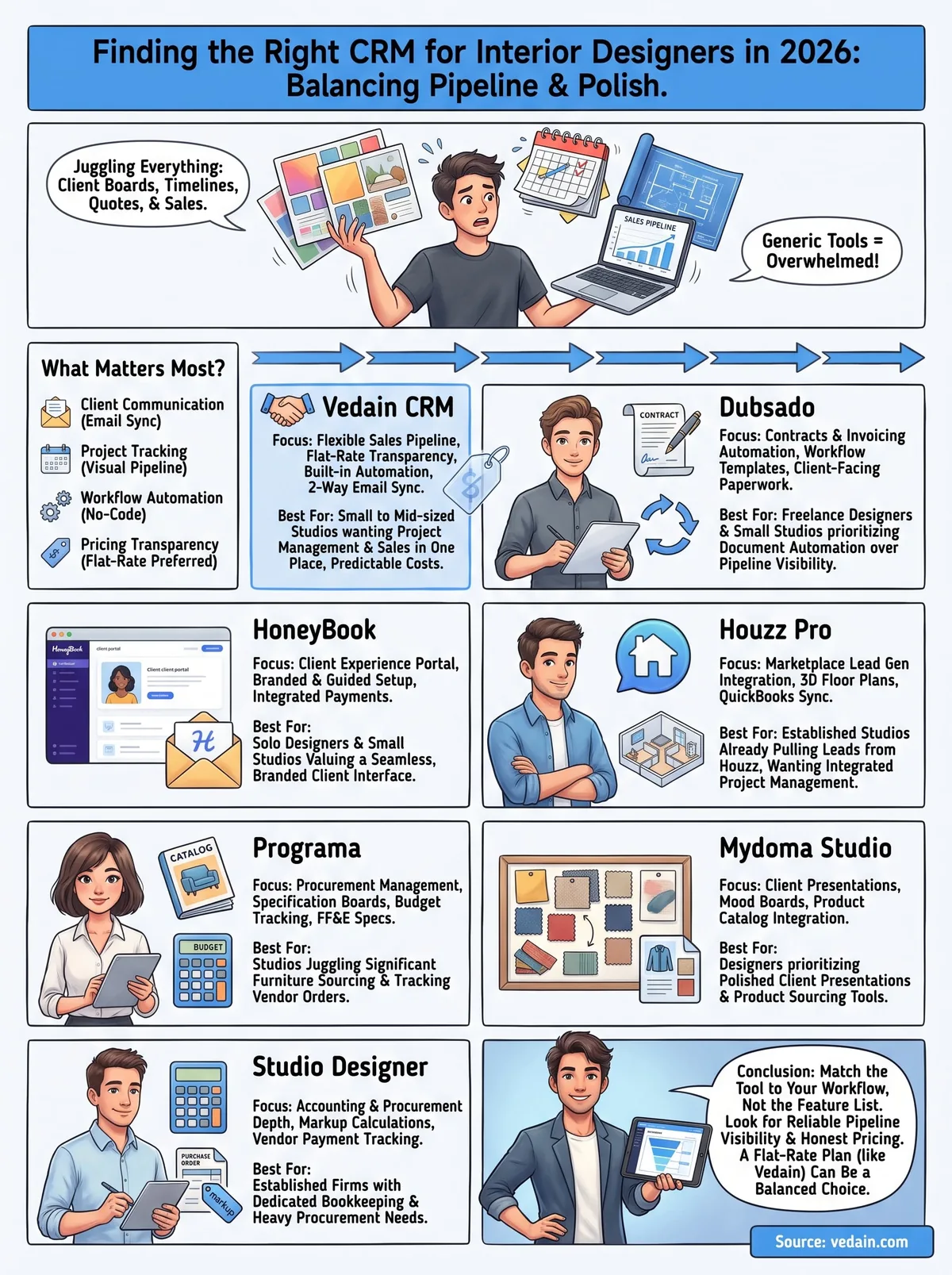
Picking the right crm for interior designers comes down to matching the tool to your actual workflow, not the flashiest feature list. Studios drowning in procurement and vendor orders will lean toward Programa or Studio Designer, while solo designers chasing polished client presentations may prefer Mydoma or HoneyBook. Firms already pulling leads from a marketplace should stick with Houzz Pro, and anyone leaning on paperwork automation over pipeline tracking will feel at home in Dubsado.
Zoom out, though, and the pattern is clear: most studios don't need industry-specific bloat, they need reliable pipeline visibility from pipeline management tools and honest pricing that doesn't punish growth. That's exactly where Vedain fits, giving you sales tracking, automation, and email sync in one flat-rate plan built for teams who'd rather spend their budget on the business, not the software. If that sounds like your studio, see what Vedain's flat-rate plan includes and costs before you commit to anything else.
Related reading
Frequently Asked Questions
What is the best CRM for interior design businesses with project management?
For studios that want project management built in, design-specific tools like Houzz Pro, Programa, Studio Designer and Mydoma Studio cover procurement, mood boards and timelines. Vedain is a general-purpose CRM rather than design-specific software: at $10/user/month it gives you a sales pipeline, custom fields, tasks and workflow automation, so it suits studios that mainly need to track leads and follow-ups. HubSpot offers a free plan for up to 2 users with paid Starter seats from $7/month (annual), and Salesforce starts at $25/user/month.
How much does a CRM cost for interior design companies?
CRM costs for interior designers range from free to $100+ per user per month depending on features and team size. Vedain costs a flat $10/user/month with every feature included, Pipedrive starts at $14/user/month (Lite, annual), Zoho CRM at $14/user/month (annual), HubSpot has a free plan for 2 users with Starter seats from $7/month (annual) or $20 monthly, and Salesforce starts at $25/user/month (Starter Suite) with Pro Suite at $100. Design-specific tools like Houzz Pro, Programa and Studio Designer typically run about $79–$299 per month.
Can interior designers use HubSpot CRM for client management?
Yes, interior designers can use HubSpot CRM for client management starting with its free tier (up to 2 users), though it lacks design-specific features like mood boards or FF&E tracking. HubSpot's contact management, pipeline tracking, and email integration work well for general client relationships, but designers often prefer Zoho CRM or Pipedrive (both from $14/user/month) or Vedain ($10/user/month) for their simplicity, or design-focused tools like Mydoma Studio or Programa for mood boards and product sourcing.
Which CRM integrates best with design and project tools for interior designers?
Design-specific platforms like Houzz Pro, Mydoma Studio and Programa integrate most tightly with design workflows such as floor plans, mood boards and product catalogs. Salesforce and HubSpot provide broader integration ecosystems with tools like Slack and Google Workspace, while Vedain (Gmail/Outlook sync, Zapier, webhooks and a REST API), Zoho CRM and Pipedrive offer solid integration options at lower price points ($10–$14/user/month) suitable for smaller design studios.
Is Salesforce too expensive for small interior design businesses?
Usually. Salesforce's Starter Suite costs $25/user/month, but the features most firms grow into sit in Pro Suite ($100/user/month) and above, making alternatives like Vedain ($10/user/month), Pipedrive (from $14/user/month), or Zoho CRM (from $14/user/month) more practical options. Small design businesses typically benefit more from focused, affordable solutions like these rather than Salesforce's enterprise-level features designed for large corporations.
What CRM features do interior designers need most?
Interior designers need CRM features including client contact management, project tracking, visual presentations, and appointment scheduling. General CRMs like Vedain ($10/user/month), HubSpot (Starter from $7/seat, annual), Pipedrive and Zoho CRM (both from $14/user/month) cover contact, pipeline and scheduling well, while design-specific tools like Houzz Pro, Mydoma Studio and Programa add mood boards, floor plans and design proposal templates.