If you're comparing options right now, you want to know which platforms actually handle travel workflows well, not generic sales tools that force you to hack together workarounds for itinerary stages or group bookings. This guide breaks down eight CRMs worth considering in 2026, looking at pipeline flexibility, email sync, automation, and pricing so you can match the tool to how your agency actually sells trips.
We tested pricing transparency, ease of setup, and how well each platform tracks deals through multiple touchpoints, since travel sales rarely close in one conversation. You'll see where flat-rate pricing beats tiered plans that gate automation behind expensive add-ons, and where a visual deal pipeline makes it easier to see which bookings need attention before departure dates arrive. By the end, you'll have a shortlist that fits your team size and budget.
1. Vedain CRM: best affordable all-in-one CRM
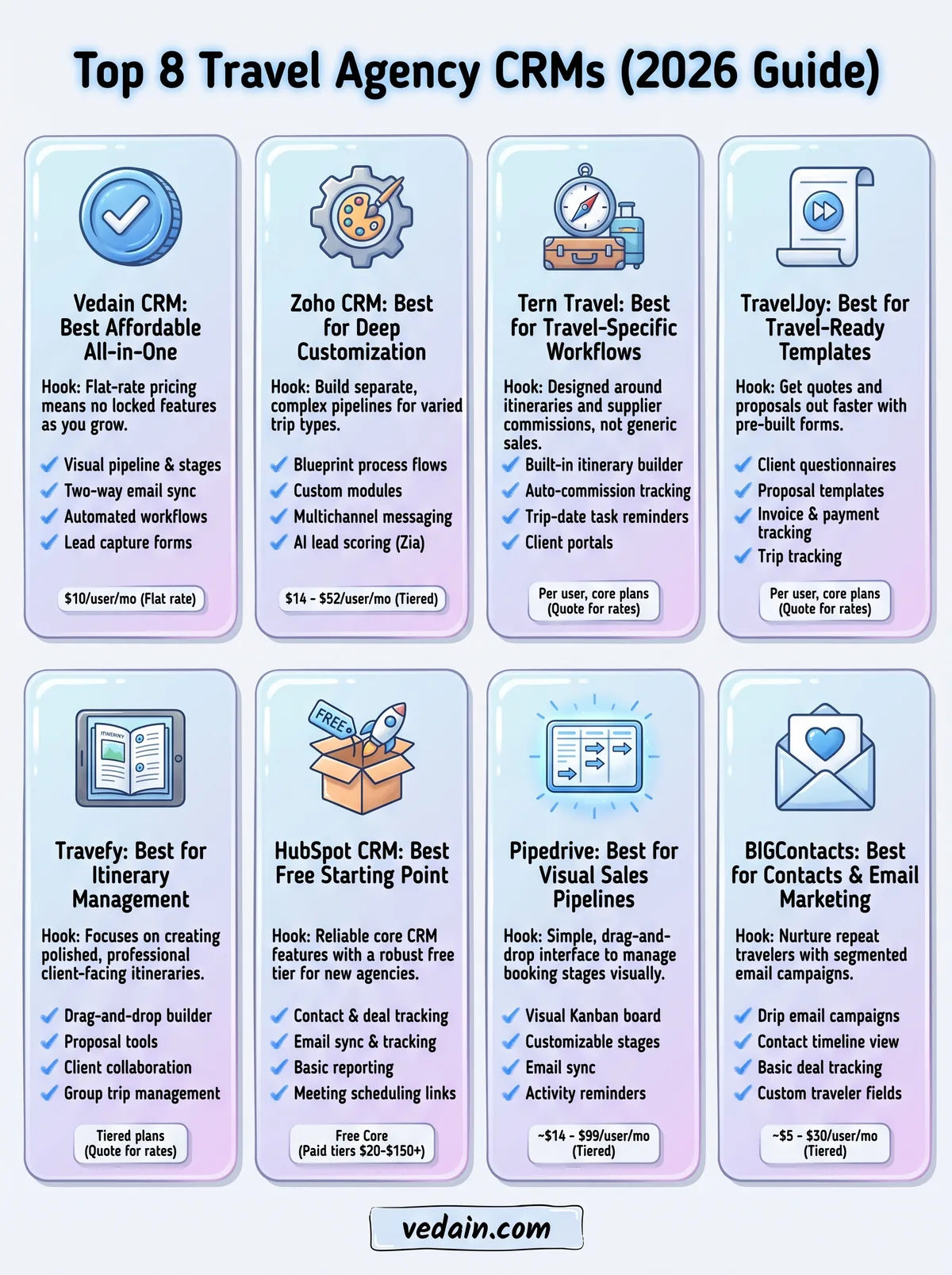
Travel agencies juggling leads, itineraries, and supplier commissions often outgrow spreadsheets fast, and that's exactly where Vedain CRM fits in. Every plan costs a flat $10 per user per month, and nothing gets locked behind a higher tier. You get the same automation, email sync, and reporting whether you're a solo travel consultant or a 40-person agency, which matters when you're comparing this to competitors that charge extra for the features you actually need to run a booking pipeline.
Key features
Agencies use Vedain to replace the mix of spreadsheets, shared inboxes, and sticky notes that usually track a client from first inquiry to final payment. The deal pipeline gives you a Kanban board with custom deal stages like "Quote Sent," "Deposit Received," and "Final Payment Due," so nothing slips through when a booking spans weeks of back-and-forth.
- •Leads & Contacts with custom fields for trip type, group size, or preferred destinations
- •Two-way email sync for Gmail and Outlook, so client replies land directly on the deal record
- •Workflows that automate follow-up emails when a quote goes unanswered for three days
- •Lead Forms to capture website inquiries straight into your pipeline
- •Reports & Analytics to see which trip types convert best and where deals stall
A CRM only earns its keep if it fits how you actually sell, and Vedain's flat pricing means you're not penalized for using the features that make it useful.
Best for
Vedain suits small to mid-sized travel agencies that want a full sales operating system without paying separately for automation, email sync, or team permissions. It's also a strong fit for agencies currently on HubSpot or Zoho who feel nickel-and-dimed every time they need a feature that's gated behind a pricier plan. Teams that split responsibilities between booking agents and account managers benefit from the granular permissions, which let you control who sees commission data without restricting access to client notes.
Pricing
Vedain charges $10 per user per month, flat, with no hidden fees and no feature tiers to climb. You can try it without a credit card, and setup typically takes under five minutes since there's no complex configuration required before your team starts logging leads. For agencies comparing what each CRM charges per user against competitors that charge $20 to $90 per user for comparable functionality, Vedain's pricing model is the most straightforward option on this list.
2. Zoho CRM: best for deep customization
Zoho CRM has been around long enough to build one of the deepest customization engines in the CRM space, and Zoho CRM's features and benefits explain why agencies with unusual workflows keep coming back to it. If your agency books group tours, corporate retreats, and honeymoon packages through completely different processes, Zoho lets you build separate pipelines, layouts, and validation rules for each without needing a developer.
Key features
Zoho's Blueprint feature lets you enforce a specific sequence of steps for each deal type, so a group booking can't skip the deposit confirmation stage the way a quick weekend getaway sale might. You also get:
- •Custom modules to track supplier contracts or commission splits alongside standard deal records
- •Multichannel messaging across email, phone, and social platforms in one timeline
- •Zia AI for lead scoring and predicting which deals are likely to close
- •Workflow rules that trigger reminders based on trip departure dates
Deep customization pays off when your booking process genuinely varies by trip type, but it also means more setup time before your team sees value.
Best for
Zoho suits agencies with complex or varied sales processes and an admin willing to spend time configuring modules, fields, and automation rules. It's a weaker fit for solo agents or small teams who want to start selling trips on day one without a configuration phase.
Pricing
Zoho's plans range from $14 to $52 per user per month billed annually, and the automation and AI features you'd want for travel workflows sit in the higher tiers. That tiered structure is worth comparing against Zoho alternatives that cost less if your team needs Blueprint-level customization without paying for an enterprise plan just to unlock it.
3. Tern Travel: best for travel-specific workflows
Tern Travel builds its entire structure around travel agency operations, not generic sales stages borrowed from software or real estate. You get a system that already speaks the language of itineraries, suppliers, and commission tracking, which cuts down the setup work you'd otherwise spend forcing a general CRM into a travel-specific shape.
Key features
Booking-centric fields sit at the core of Tern's design, letting you track trip dates, supplier names, and traveler counts without building custom fields from scratch. The platform bundles:
- •Itinerary builder tied directly to each client record
- •Commission tracking that calculates payouts per supplier automatically
- •Automated task reminders tied to trip departure and final payment dates
- •Client portals where travelers can view and approve itinerary drafts
Purpose-built travel fields save you the setup time you'd spend customizing a generic CRM to handle bookings.
Best for
Agencies that book complex, multi-supplier trips find the most value here, especially teams already thinking in terms of itineraries rather than generic sales deals. Consultants who sell custom or luxury travel packages benefit from having commission math and supplier details native to the platform instead of bolted on through standalone commission tracking tools. Smaller agencies or solo agents selling simpler trips may find the feature set heavier than what they actually need day to day.
Pricing
Tern Travel prices per user with plans that scale based on team size, and travel-specific features like commission tracking sit inside the core plans rather than gated behind add-ons. Exact rates require a quote from their sales team, so agencies comparing costs against flat-rate platforms should confirm total pricing before committing, especially if you're weighing it against simpler, lower-cost alternatives.
4. TravelJoy: best for travel-ready templates
TravelJoy built its reputation on templates that get travel advisors selling faster, since most of the paperwork around quotes, invoices, and client questionnaires already exists in a format built for trip planning. Instead of designing forms from scratch, you pull from a library that already understands what a travel agency needs to send a client before, during, and after a booking.
Key features
Questionnaires and proposal templates sit at the center of TravelJoy's appeal, letting you gather trip preferences and send polished quotes without building documents from a blank page, much like dedicated tools for managing quotes and proposals do. The platform also includes:
- •Automated client questionnaires to capture trip preferences before the first call
- •Invoice and payment tracking tied to each client record
- •Trip and reservation tracking across multiple suppliers per booking
- •Email templates built specifically for travel inquiry follow-ups
Ready-made travel templates cut the time between a lead landing in your inbox and a client actually seeing a quote.
Best for
Solo travel advisors and small agencies that want to look professional fast, without spending weeks designing their own proposal and invoice formats, get the most out of TravelJoy. It suits teams who value speed to first quote over deep customization, since the templates cover most standard travel sales scenarios out of the box. Agencies with unusual booking processes or multiple pipelines running side by side may find the structure less flexible than a platform built for custom stages.
Pricing
TravelJoy prices per user with plans that scale by team size and feature access, and template-heavy features generally sit inside the standard tiers rather than requiring add-ons. Agencies should request current rates directly, since published pricing shifts more often than flat-rate competitors, and confirm whether reporting and automation come standard or cost extra as your team grows.
5. Travefy: best for itinerary management
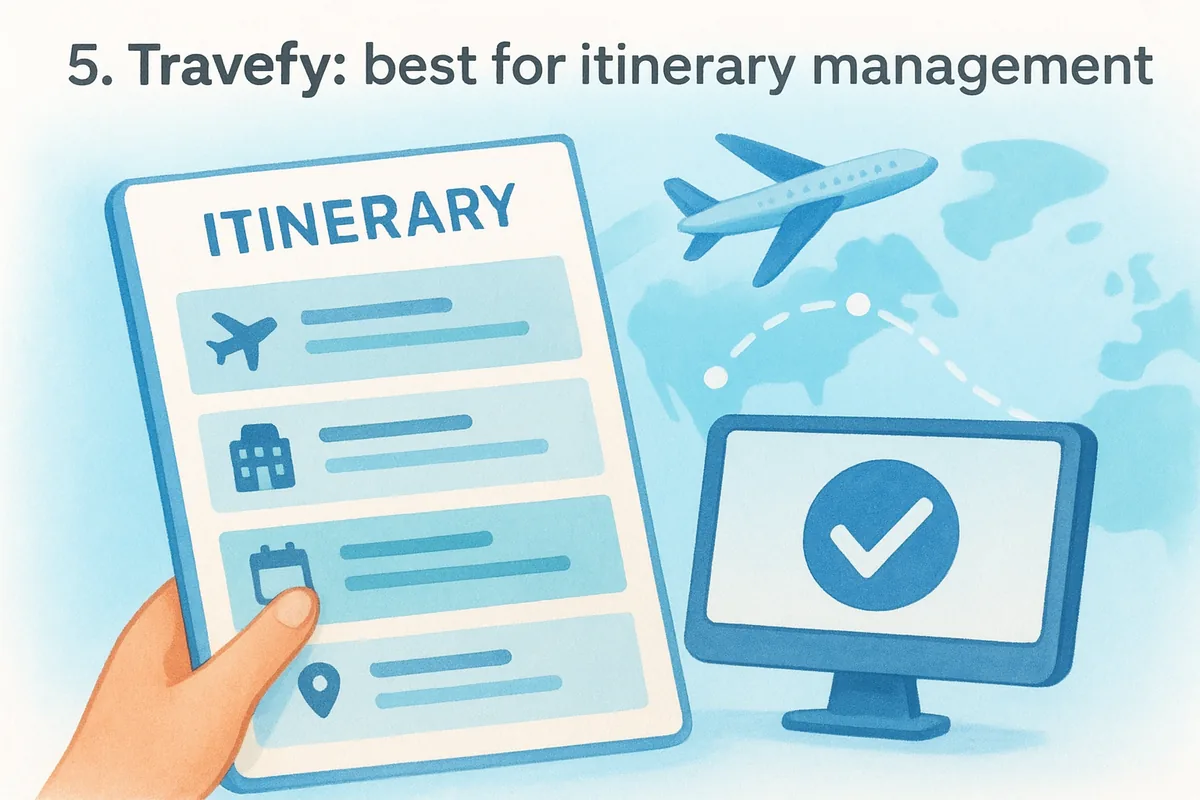
Travefy focuses on one job and does it well: turning a list of flights, hotels, and activities into a polished client-facing itinerary that looks like a professional trip document instead of a spreadsheet export. Agencies choose it when their biggest pain point isn't lead tracking but the hours spent formatting travel plans by hand for every client, especially on multi-stop trips with several suppliers involved.
Key features
Building an itinerary here means dragging in flights, lodging, and excursions, then letting Travefy assemble a shareable timeline your client can access from any device. Beyond the itinerary builder, the platform includes:
- •Proposal tools for presenting quotes before a client books
- •Client collaboration features that let travelers comment on draft itineraries
- •Group trip management for coordinating multiple travelers on one booking
- •Branded templates that carry your agency's logo and colors across every document
An itinerary that looks professional builds client trust faster than any sales pitch.
Best for
Agencies selling complex, multi-leg trips get the most value from Travefy, particularly teams booking group travel where several travelers need visibility into the same itinerary. Consultants who spend more time assembling trip documents than chasing leads will notice the time savings immediately. Smaller operations focused mainly on pipeline tracking or a CRM for travel agencies handling high lead volume may find the feature set narrower than what a full sales platform offers.
Pricing
Travefy prices per user across tiered plans, with itinerary and proposal tools included from the entry level and collaboration features expanding in higher tiers. Rates require checking current listings directly, since travel-specific software often adjusts pricing more frequently than general CRM platforms.
6. HubSpot CRM: best free starting point
HubSpot built its reputation on a free CRM tier that actually works, not a stripped-down demo designed to push you toward a paid plan within a week, though it's worth knowing the limits on HubSpot's free plan before you commit. Small travel agencies testing whether a CRM fits their process before committing budget often start here, since you can track leads, log emails, and manage a basic pipeline without entering a credit card.
Key features
Contact records sync automatically with Gmail and Outlook, the same way other CRMs with Gmail and Outlook sync work, so client conversations stay attached to the right deal without manual forwarding. The free tier also includes:
- •Deal pipeline with customizable stages for tracking bookings
- •Email tracking that shows when a client opens a quote
- •Basic reporting dashboards for pipeline visibility
- •Meeting scheduling links to cut down back-and-forth on booking calls
Free software still needs to prove it can grow with you, and HubSpot's paid tiers are where that promise gets tested.
Best for
Agencies just starting to formalize their sales process, or solo agents unsure whether a dedicated crm for travel agencies even makes sense yet, get the most value from HubSpot's entry point. Teams comfortable eventually paying more as they add marketing automation or custom reporting will find a natural upgrade path here. Agencies wanting travel-specific fields or itinerary tools out of the box should look elsewhere, since HubSpot stays generic by design.
Pricing
HubSpot's CRM core stays free indefinitely for basic contact and deal tracking, but what HubSpot Sales Hub costs per seat starts around $20 per user monthly for real automation and climbs past $150 at higher tiers. Agencies should map out which features they'll actually need before assuming the free plan covers long-term operations.
7. Pipedrive: best for visual sales pipelines
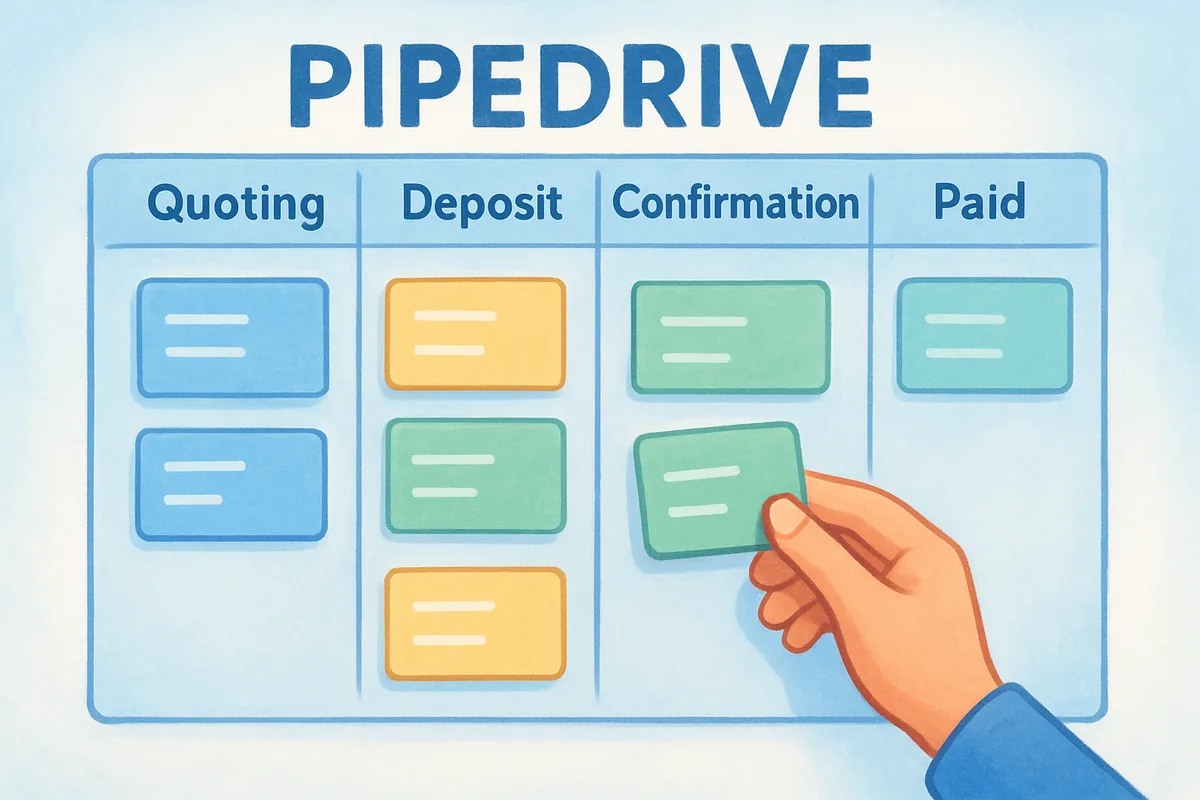
Pipedrive built its entire product around one idea: sales reps think in pipelines, not spreadsheets. Agencies that want a clean, drag-and-drop view of every booking, from first inquiry to final payment, gravitate toward Pipedrive because the interface stays out of your way. It's not travel-specific, but the visual pipeline maps naturally onto how trips move through stages like quoting, deposit, and confirmation.
Key features
Deals move across a Kanban-style board that updates instantly as you drag a booking from one stage to the next, the pattern most pipeline management software compared for 2026 follows, giving you an at-a-glance view of which trips need attention before a departure date. The platform also includes:
- •Customizable pipeline stages built around your booking process
- •Email sync with two-way tracking for Gmail and Outlook
- •Activity reminders tied to follow-up calls and payment deadlines
- •Revenue forecasting based on deal value and expected close date
A pipeline you can see and drag is easier to manage than one buried in filters and spreadsheet columns.
Best for
Small to mid-sized agencies that prioritize a clear visual pipeline over travel-specific fields do well here, especially teams who want something simpler than Zoho but more sales-focused than TravelJoy or Travefy. Agencies needing built-in itinerary tools or commission tracking will still need a separate tool alongside Pipedrive.
Pricing
Pipedrive's plans run from about $14 to $99 per user per month billed annually, with automation and advanced reporting reserved for higher tiers. Agencies comparing this against Pipedrive alternatives priced for SMBs should check whether the automation they need sits in the entry plan or requires upgrading.
8. BIGContacts: best for contacts and email marketing
BIGContacts leans into its name: contact management and email marketing sit at the center of the platform, making it a fit for agencies whose biggest challenge is nurturing a long list of past travelers rather than managing a complex booking pipeline. Owners who send seasonal deals, birthday discounts, or destination-specific promotions to a large client database often find this platform does more of that work out of the box than a general sales CRM.
Key features
Segmentation drives most of what makes BIGContacts useful for travel agencies, and like other contact management software for sales teams, it lets you group contacts by past destinations, trip budget, or travel frequency before sending a campaign. The platform also includes:
- •Drip email campaigns that trigger based on client behavior or trip dates
- •Contact timeline showing every email, call, and note in one view
- •Basic deal tracking for bookings in progress
- •Custom fields for storing traveler preferences and past destinations
A CRM built around your contact list pays off most when repeat travelers, not new leads, drive your revenue.
Best for
Agencies with a large base of repeat travelers and a focus on email marketing over pipeline complexity get the most from BIGContacts. It suits smaller teams that want contact segmentation and automated nurture sequences without paying for a full-featured sales platform. Agencies needing detailed itinerary tools or supplier commission tracking will still need to pair it with a separate system.
Pricing
BIGContacts prices range from roughly $5 to $30 per user per month, with email automation and advanced segmentation reserved for mid and higher tiers. Agencies should confirm which contact limits and campaign features apply at each tier before committing, since entry-level plans cap list sizes more tightly than travel agencies with large client databases may expect.
Picking the right fit for your agency
Your choice comes down to what actually slows your team down today. If itinerary formatting eats your week, Travefy or Tern Travel earn their keep. If your list of repeat travelers is your real growth lever, BIGContacts fits better than a sales-heavy platform ever will. But if you're tired of paying extra every time you need automation, email sync, or another teammate added to the system, that's the exact problem flat-rate pricing solves.
Most travel agencies don't need travel-specific software as much as they need a reliable sales pipeline that doesn't punish them for growing. Vedain CRM gives you leads, deals, email sync, and workflows at one price, without a sales call to find out what a higher tier costs. See every plan and what's included, and find out how far $10 per user actually goes for your agency.
Frequently Asked Questions
What is the best CRM for travel agencies in 2026?
The best CRM for travel agencies depends on your agency size and budget, but top options include Vedain (specifically designed for travel), HubSpot (starting at $45/month), Salesforce (starting at $165/month), and Zoho CRM (starting at $14/month). Vedain stands out for travel-specific features like itinerary management and supplier integrations, making it ideal if you prioritize industry-tailored functionality over general-purpose platforms.
How much does CRM software cost for travel agencies?
CRM costs for travel agencies vary widely: Zoho CRM starts at $14/month per user, Pipedrive begins at $14/month, HubSpot's free plan is available with paid tiers starting at $45/month, and Salesforce starts at $165/month for enterprise features. Vedain offers custom pricing tailored to travel agency needs, typically positioned as a mid-market solution between budget and enterprise options.
Which CRM is best for small travel agencies?
For small travel agencies, Zoho CRM and Pipedrive are excellent choices due to their affordable pricing ($14/month) and user-friendly interfaces designed for small teams. HubSpot also offers a robust free plan suitable for agencies just starting CRM adoption, though Vedain may provide better travel-specific features if budget allows for a slightly higher investment.
Can Salesforce be used for travel agency management?
Yes, Salesforce can be used for travel agency management, but it requires significant customization and implementation costs starting at $165/month, making it better suited for large travel companies. Competitors like Vedain, Zoho CRM, and Pipedrive offer more out-of-the-box travel-specific functionality at lower price points, which is why many mid-sized agencies prefer them.
What features should a travel agency CRM have?
A travel agency CRM should include client management, booking tracking, itinerary storage, supplier integration, and automated follow-ups. Vedain excels in these travel-specific areas, while HubSpot, Salesforce, and Zoho offer strong customization capabilities to add travel features, though Pipedrive focuses more on sales pipeline management than travel operations.
Is HubSpot good for travel agencies?
HubSpot is good for travel agencies focused on sales and marketing automation, with pricing starting at $45/month for its CRM suite and strong email integration features. However, it lacks native travel-specific functionality compared to Vedain, and agencies may need additional tools for itinerary management and supplier tracking that competitors like Zoho CRM can provide through integrations or specialized add-ons.